The next call matters because a prospect who has already answered once is the warmest name on your list, and the second conversation is usually where the meeting gets booked. Most teams waste that pickup by calling back late, at a random hour, with no record of what was said, so call two sounds exactly like call one.
Key Takeaways
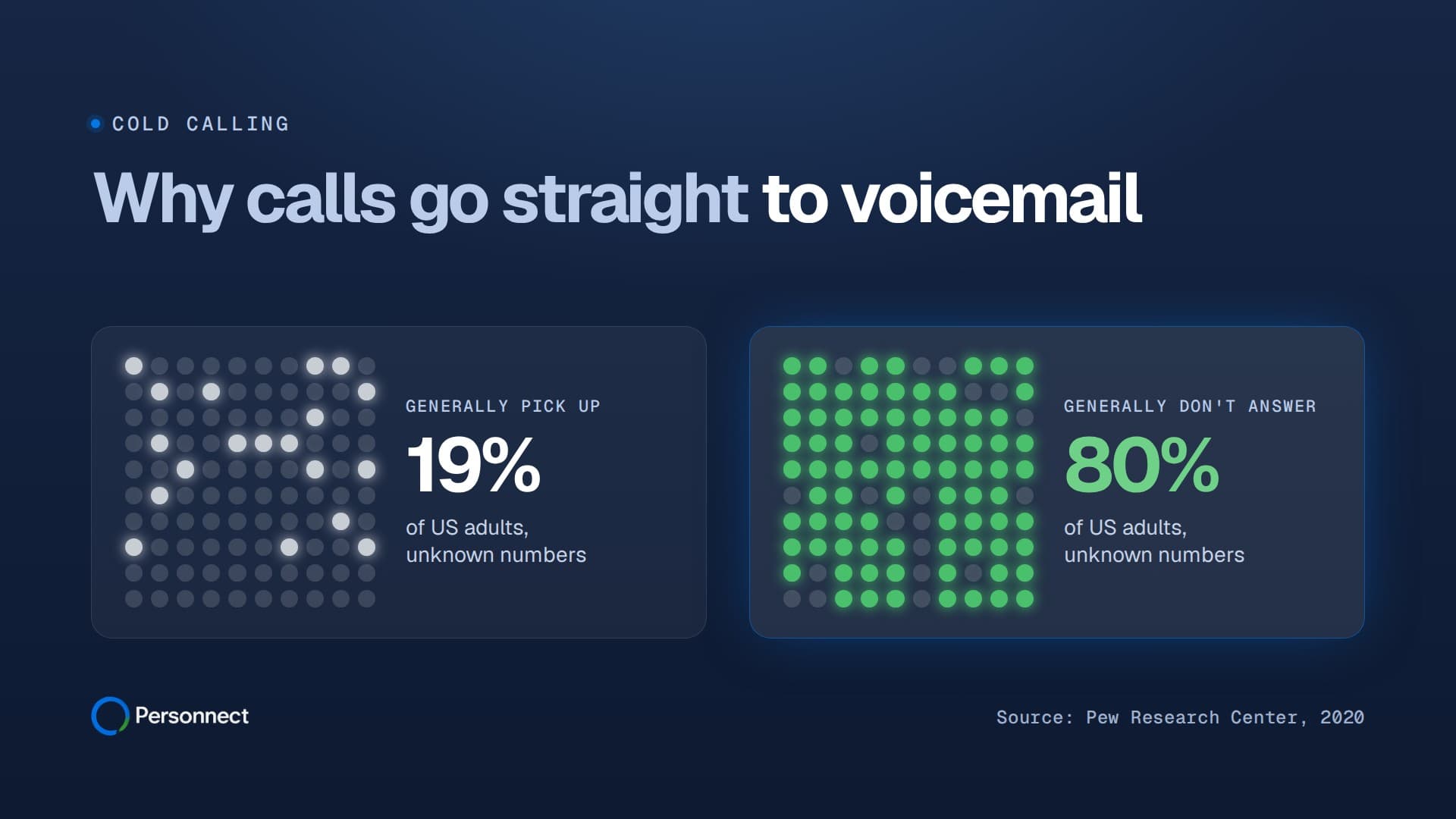
- A live answer is scarce: eight in ten Americans say they generally don't pick up when an unknown number calls, so a prospect who did is worth protecting.
- "Call me next week" and "send me something" are the start of a second conversation, and that second conversation is where most meetings get set.
- Capture their exact words, the reason behind "not now", the time they gave, the number they answered on and anyone else they named.
- Call back at the time they picked, at the hour they answered, and open with what they told you so it can't be mistaken for a cold call.
- If call two doesn't connect, leave a voicemail built on their words and send one short note, then follow your normal attempt limit.
Why is a first pickup worth so much?
A first pickup is worth a lot because so few calls produce one. In a Pew Research Center survey, eight in ten Americans said they don't generally answer their cellphone when an unknown number calls (Pew Research Center, 2020). The person who did answer has already made an exception for you.
The sales numbers say the same thing from the other side. Gong's study of more than 300 million cold calls put the average rep's connect rate at 5.4%, which means roughly 19 dials for each conversation (Gong, 2024).
Now compare that with what happens to the conversation afterward. In many teams the prospect who said "try me next Tuesday" goes back into the same cadence as everyone who never picked up. They get the same template email, a call on whatever day the sequence decides, and a rep who has to scroll through a log to remember who they are. Nineteen dials bought that conversation, and the follow-up treats it like dial number twenty.
Why do meetings get set on the second conversation?
Meetings get set on the second conversation because the first one mostly ends in a polite deferral. Gong Labs found that dismissive objections make up 49.5% of all objections on cold calls, and the list includes "Call me in 6 months" and "Send me some information" (Gong Labs, 2024). Those answers end call one, yet each one invites a call two.
Even good first calls rarely end in a booked slot. Gong measured how many conversations turn into meetings and found 4.6% for the average rep against 16.7% for the top quartile (Gong, 2024). Some of them say "later", and that "later" is the pipeline.
Cognism's 2026 cold calling report quotes James Greene saying that "In large B2B sales, success rarely happens on the first call" (Cognism, 2026). The same report puts the industry's average cold call success rate at 2.7%. If the first call is mostly an introduction, the callback is where you have context, a known contact and a time they agreed to.
There's also the buying group to think about. Forrester reports that on average 13 people inside an organization are involved in a purchase decision, and 89% of purchases involve two or more departments (Forrester, 2024). "Let me check with my boss" is often literally true. The second call is the first chance to hear what the boss said.
What should you capture while they're still on the line?
Capture whatever you'll need to make the next call sound like a continuation: what they said, why they said it, when they want to hear back, how you reached them and who else matters. If it isn't written down within a minute of hanging up, assume it's gone by the time the callback comes around.
Their words, not your summary
Write down the phrase they used. "We're mid-migration until the 15th" is far more useful on call two than "timing objection". Their own words give you an opener they'll recognize, and they stop you from pitching the problem they already told you they don't have.
The reason behind "not now"
"Not now" covers a budget freeze, a busy quarter, a renewal date with another vendor and plain politeness. Ask one short question before you hang up: "Is that a timing thing or a fit thing?" The answer decides whether a callback makes sense at all, and how hard to push when you make it.
The time they gave and the number that worked
If they named a day, log the day. If they named an hour, log that too, in their time zone. Note which number they answered on as well. A mobile that picked up at 8:40 a.m. is a better bet for call two than the switchboard in your list.
Anyone else they mentioned
A name, a team or a title ("our ops lead handles that") changes the second call. You may need to ask for that person, or prepare for them to join. Log it next to the contact so it travels with the record.
Typing all of this while you're still talking is hard, so it helps when the system does part of it. Personnect logs the summary, transcript and outcome of every call and syncs them to the contact in HubSpot or Salesforce, so whoever makes call two can read what was said on call one. The rep still adds the one-line note that matters most: what to say first next time.
How should each first-call answer shape the callback?
Each answer tells you something different about timing and about what to say first.
| They said | It often means | Call back | Open with |
|---|---|---|---|
| "Call me next week" | Real interest, bad timing | Day and hour they named | "You asked me to try you today" |
| "Send me something" | Polite exit or real curiosity | After they've had a day to open it | "Did the one-pager answer your question on X?" |
| "Not now, we're busy" | Timing, sometimes fit | When the busy period ends | "You said things calm down after the launch" |
| A specific question | Active problem | Within a day, with the answer | "I found the answer to what you asked" |
| "Talk to my boss" | Buying group | After they've spoken to them | "Did you get a chance to ask Dana?" |
| Hung up politely | Wrong moment | A different day, same hour | A short reminder of who you are |
The pattern holds across rows. The callback date comes from them, and the opener quotes them back. When a prospect gave you neither, as with a polite hang-up, you're closer to a cold call again and should treat it that way.
When should you make the follow-up call after a cold call?
Make the follow up call after a cold call at the time the prospect gave you, and if they didn't give one, at the same hour of day they picked up the first time. A promise kept on time is the easiest trust you'll ever build with a stranger.
Keep the promise, to the hour
"I'll call you Thursday at ten" is a small commitment, and prospects notice when it's honored. Calling Friday afternoon instead tells them you're working a list. If the time they gave falls in a different time zone, check it before the day starts, for example with a prospect local time tool, so a 10 a.m. promise in Denver doesn't become a noon call from New York.
Use the hour they actually answered
When there's no promised time, the hour they picked up is your best data point. People have routines: a commute, a block between meetings, a quiet first half hour at the desk. A prospect who answered at 4:45 p.m. once is more likely to answer at 4:45 p.m. again than at whatever slot your sequence picks.
Make room on the calendar for callbacks
Callbacks usually slip because the day runs out. Only 28% of a rep's week goes to actual selling, according to the State of Sales survey of more than 7,700 sales professionals (Salesforce, 2022). When the cold calling block eats the morning, the Thursday-at-ten promise gets pushed. A parallel dialer shortens that block: Personnect runs up to five lines at once per rep and detects and skips voicemail, so the hour spent chasing new pickups gets shorter and there's room left to keep the promises already made.
How do you open the second call so it's clearly not a cold call?
Open with their name, your name and the thing they told you, all in the first ten seconds. The goal is that before they've decided whether to stay on the line, they've already recognized the conversation as one they agreed to.
A good opener sounds like this: "Hi Maria, it's Sam from Northwind. Last Tuesday you said to call after your board meeting, so I'm calling back as promised. How did it go?" It names the previous call, proves you listened, and hands them the next line.
Compare that with "Hi Maria, did I catch you at a bad time?" That's the opening of a cold call. It forces her to place you, and most people who can't place a caller assume it's a sales call and look for the exit.
Skip the pitch you already gave
They heard your thirty-second version on call one. Repeating it signals that you don't remember the conversation. Start where you left off: their question, their timing issue, the person they were going to ask.
Have the record on screen before they say hello
The opener only works if the rep knows the context the moment the call connects. With Personnect, the rep is connected the moment a person answers, with the contact's details on screen, and the summary from call one is already logged to that contact. That's the difference between "Hi Maria, you mentioned the board meeting" and "Hi, is this Maria?"
What should you send between the first and second call?
Send one short message within a day that confirms what you heard and when you'll call, plus whatever they asked for. Nothing else. A recap the prospect can scan in ten seconds makes call two feel expected, and a sequence of generic touches makes it feel automated.
A good recap email has three parts. Their words ("You said Q1 planning wraps on the 15th"), the thing they asked for if they asked for something, and the callback time ("I'll call Thursday at 10:00 your time"). If they asked a specific question, answer it in the body, because many people won't open a file from someone they spoke to for two minutes.
Pull the contact out of any automated sequence they were in. A prospect who agreed to a call next Thursday shouldn't receive "Just bumping this to the top of your inbox" on Wednesday. That single email undoes most of the goodwill call one created.
What if the second call doesn't connect?
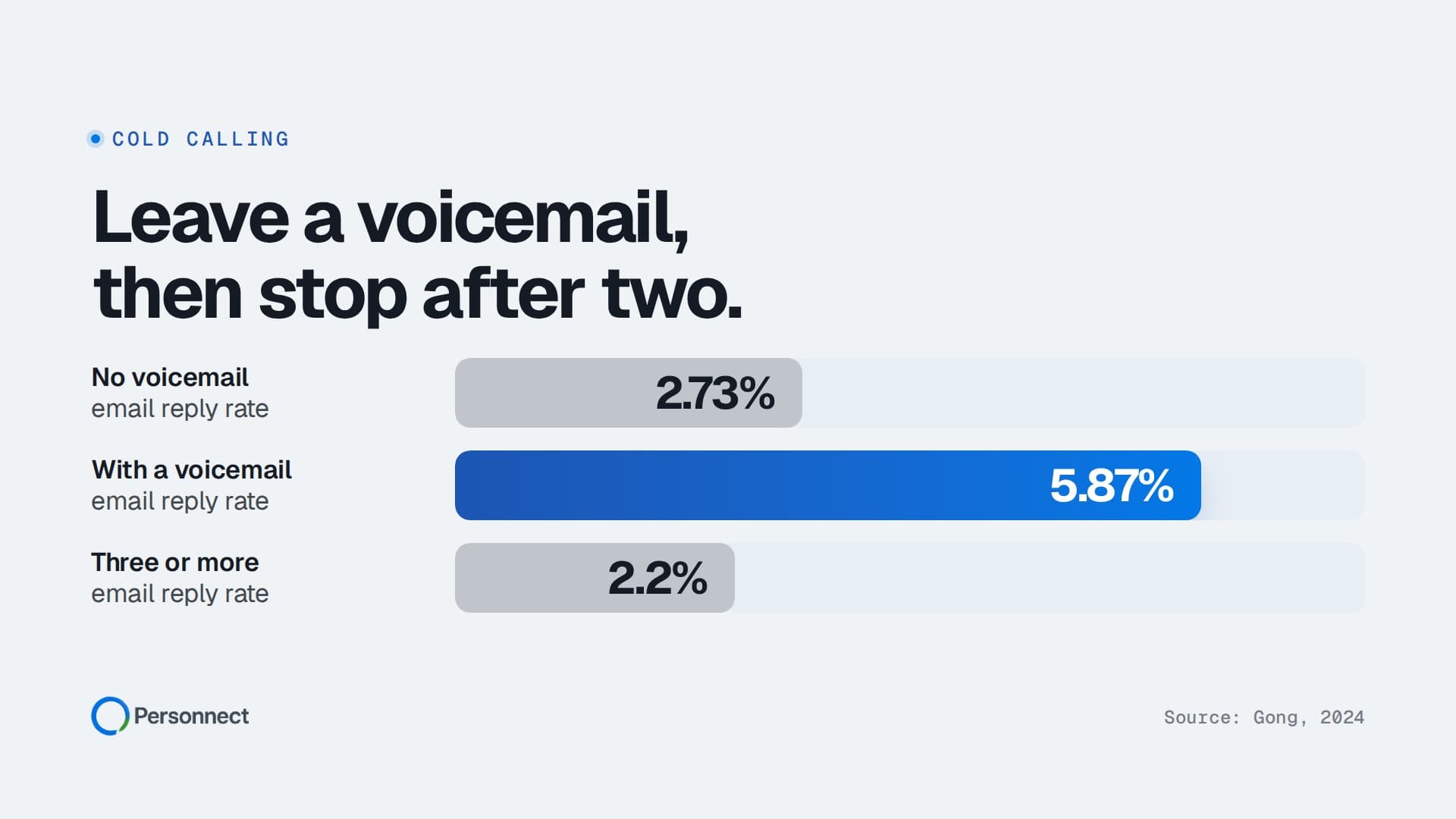
If call two doesn't connect, leave a short voicemail that repeats their own words and the time you'd agreed, then send a two-line email saying the same. Try once more at a different hour within the next few days before you fold them back into your regular attempt count.
The voicemail matters more here than on a cold call, because they know who you are. "Maria, it's Sam from Northwind, calling back after your board meeting like you asked. I'll try again Friday morning, or you can reach me on this number." That gives them a reason and an easy way to call back. Cognism's 2025 data puts the chance of reaching a prospect on a callback at 26.85% (Cognism, 2025), and a prospect who already knows your name has one less reason to ignore it. With Personnect, callbacks always reach your team, so when Maria dials back she gets a rep, and unanswered calls still verify your contacts along the way.
How many more times you try after that is the same question as for any prospect, and our guide on how many times to call a prospect covers attempt limits and spacing. The difference with a previous pickup is the context you carry into each attempt. The cost of letting these contacts drop is covered separately in our look at what a missed follow-up costs.
What changes when you treat the callback like a booked slot?
When a prospect gives you a time, treat it the way you'd treat a meeting on your calendar. It has a date, an hour and a reason. Most of what makes call two work happens before you dial: writing down their words, knowing why they said "not now", checking their local time, and pulling them out of the cold sequence. The call itself is easy when the prep is done, because you start halfway through a conversation instead of at the beginning. Teams that already fight for every live answer can get more meetings out of the conversations they've already had, without adding a single dial. What it takes is a short note after every live call and a rep who calls when they said they would.
Frequently Asked Questions
How soon should I call back when a prospect said call me back?
Call at the time they named. If they said "next week" without a day, pick the same weekday and hour they first answered. If they gave no timing at all, a few business days is reasonable. Aim for the moment they're expecting you; speed matters less here than keeping your word.
What if the prospect doesn't remember the first call?
Many won't, and that's fine. Remind them in one sentence using something they said: "You mentioned the migration finishes on the 15th." Specific details trigger memory far better than your company name. If they still can't place you, treat it as a fresh conversation and keep the reference light.
Should the second call to a prospect come from the same number?
A local number matters more than an identical one. Personnect calls each contact from a local number in their area code, and those numbers are registered in your company's name with Verizon, AT&T and T-Mobile, so the number they see on the second call looks as familiar as the first.
How do I follow up after a cold call if another rep made the first call?
Read the call record before dialing, not during. You need their words, the agreed time and anyone they named. Open by naming the colleague ("My colleague Sam spoke with you last week about...") so the prospect knows the conversation is continuing, then pick up where it stopped.
Sources
- Pew Research Center pewresearch.org/short-reads/2020/12/14/most-americans-dont-answer-cellphone-calls-from-unknown-numbers
- Gong gong.io/blog/the-hidden-power-of-cold-calling-insights-from-300m-calls
- Gong Labs gong.io/resources/labs/we-found-the-top-objections-across-300m-cold-calls-heres-how-to-handle-them-all
- Cognism cognism.com/reports/cold-calling-report-2026
- Forrester forrester.com/press-newsroom/forrester-the-state-of-business-buying-2024
- Salesforce salesforce.com/news/stories/sales-research-2023
- Cognism cognism.com/blog/cold-calling-statistics