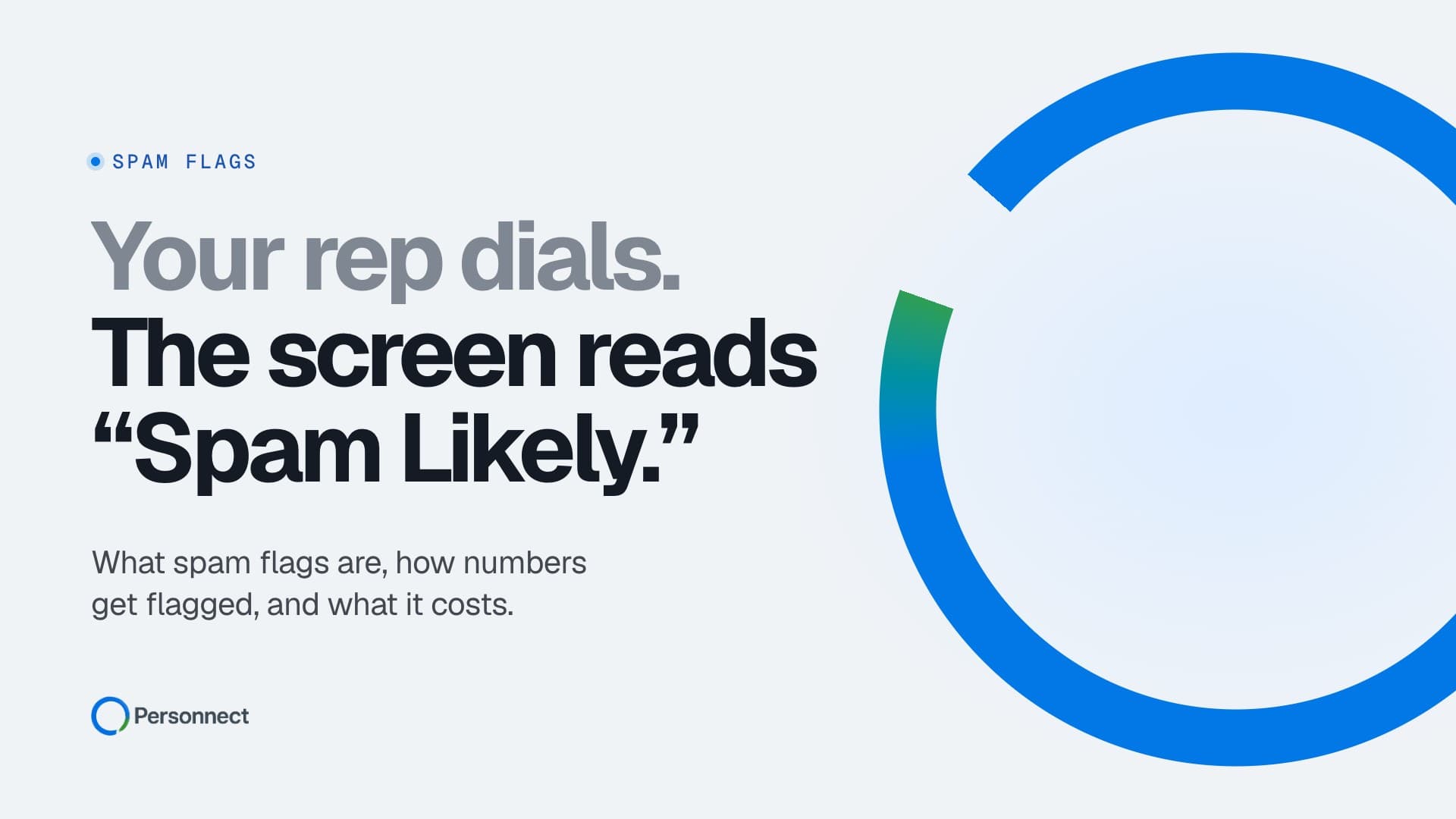
Why calls get labeled Spam Likely
Carriers and the call-analytics services behind them score phone numbers on how they behave. A number that suddenly places a lot of calls, has many short or unanswered calls, or gets rejected and reported is likely to be labeled. The label shows on the prospect's screen as Spam Likely, Scam Likely or Potential Spam.
Read more on what spam flags are.
What a label costs you
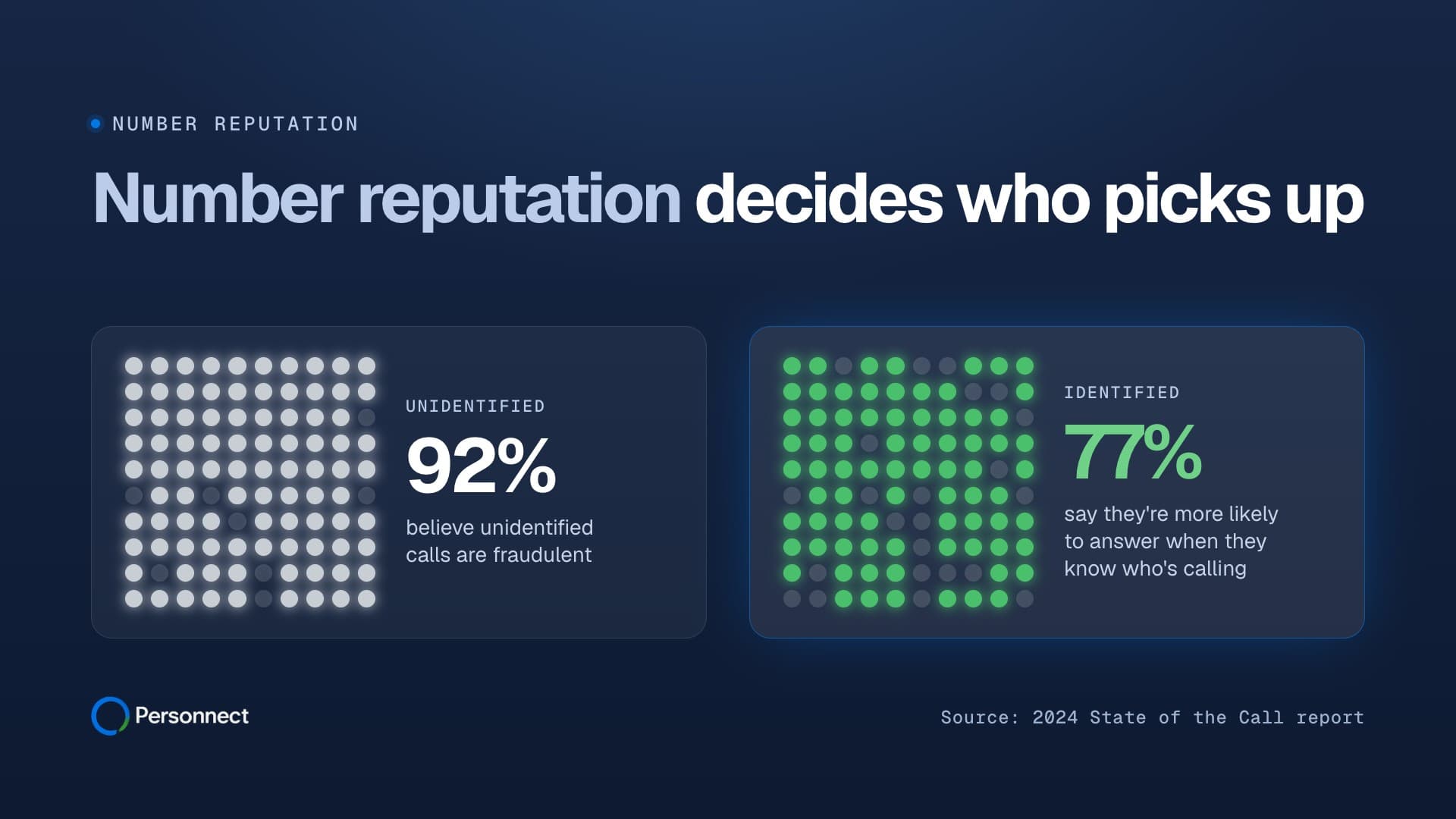
A labeled number still rings, but most people won't pick up a call their phone marks as spam. Your reps keep dialing, your connect rate drops, and nothing in an ordinary dialer tells you why. Every list you work from that number performs worse until the label is gone, and most teams only notice once pickups have already fallen for days.
Signs a number may be flagged
- Pickups fall off on a number that used to work well.
- Prospects who used to call back stop calling back.
- A colleague on a different carrier sees a warning when you call them.
What Personnect does for you
- Every number is registered in your company's name with Verizon, AT&T and T-Mobile.
- New numbers ease in before they carry full volume.
- Calls are spread evenly across your numbers, so no single number carries the load.
- Every number is watched automatically.
- Flagged numbers are rested until they're clean, and replaced when they need to be.
Nobody on your team keeps a spreadsheet of numbers or checks them by hand. It all runs in the background while your reps dial.
What no one can promise
Labels are applied by carriers and their analytics partners, not by your dialer, so no tool can guarantee a number is never labeled. What Personnect does is keep every one of your numbers in the best standing it can, without anyone on your team having to think about it.
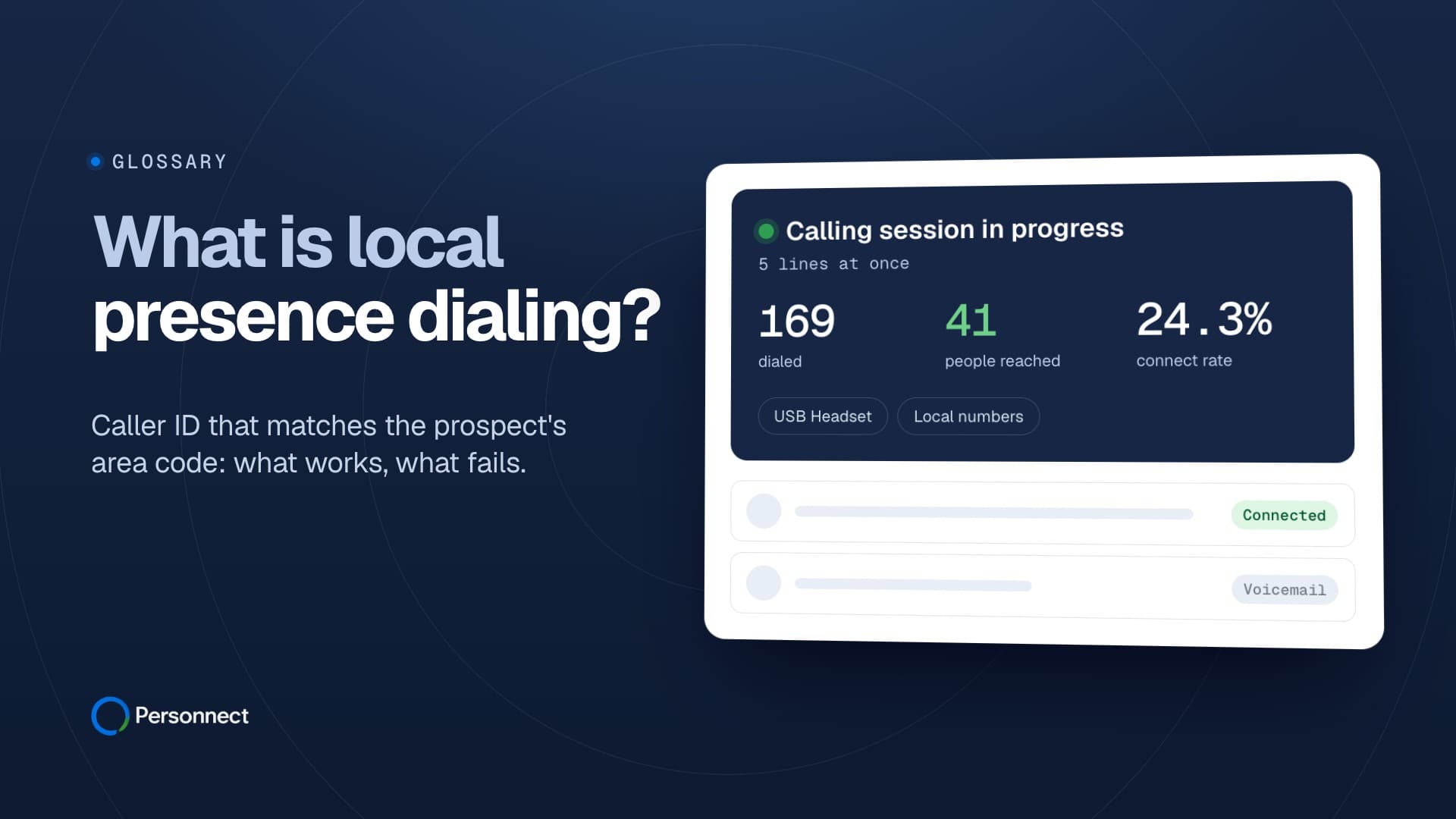
Local numbers make this matter more: they only help while they stay clean. See local presence and why number reputation is your most valuable asset.