Your sales calls go straight to voicemail because something between your dialer and the prospect's ear stops the ring: their phone is off or out of signal, they declined or were already on a call, their phone silences numbers it doesn't know, your number carries a spam label, or you're dialing a line they never answer. The pattern of rings you hear, and which calls it happens on, tells you which of those you're dealing with. Most of the causes sit on the prospect's side, but almost every one has a fix on yours.
Key Takeaways
- Zero rings usually means the phone is off, out of signal or set to block you; one short ring usually means a decline or a call already in progress.
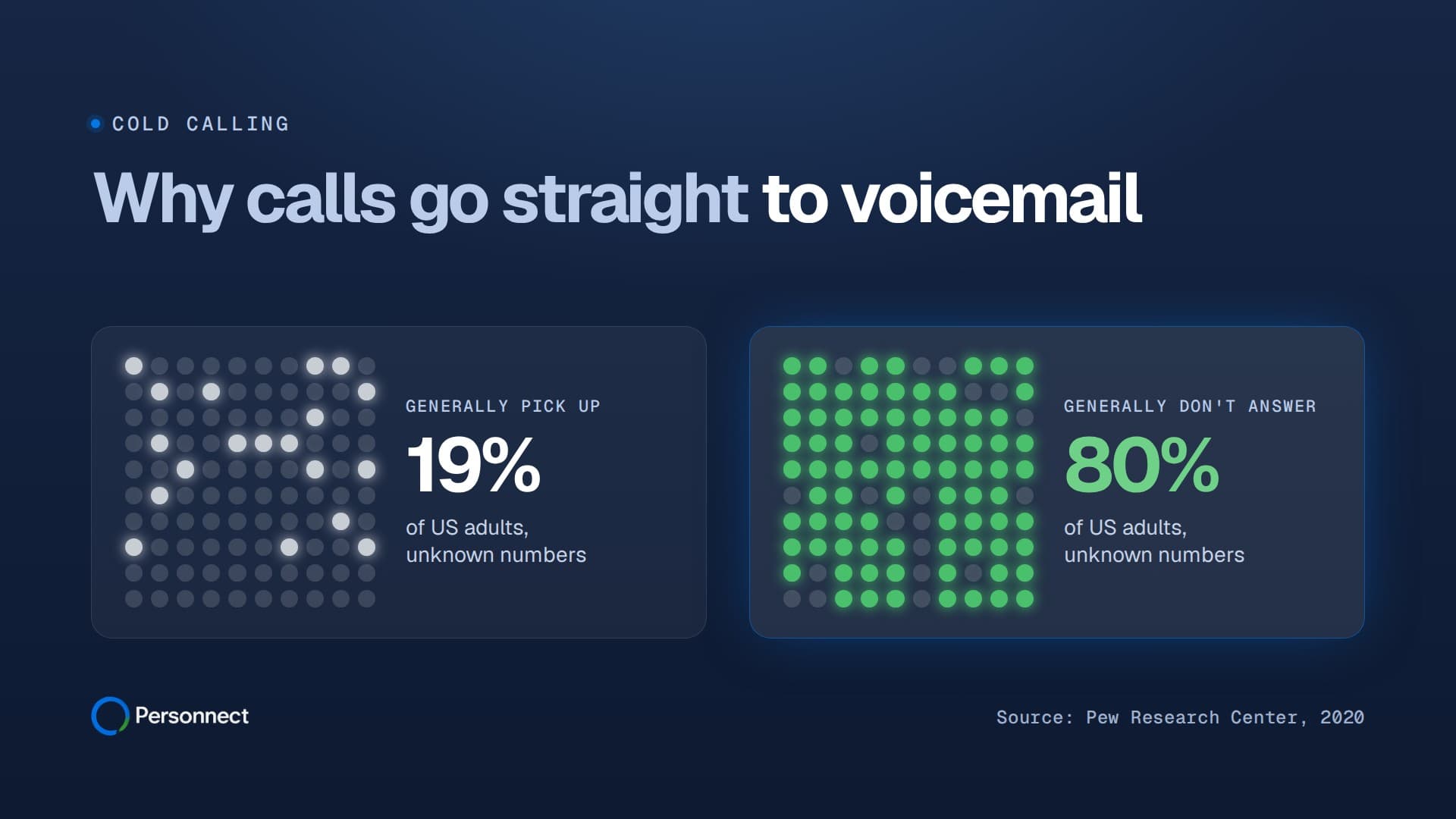
- Built-in iPhone and Pixel settings can send any number outside the contact list to voicemail, and 80% of US adults told Pew they generally don't answer unknown numbers anyway.
- A spam label, a main office line or a stale number can look exactly like a busy prospect, so test from several phones before you blame the list.
- Time of day, the type of number you dial and how fast you redial are all on your side of the call, and they're the cheapest things to change.
What does it mean when a call skips the ring entirely?
A call that lands in voicemail with no ring at all almost always means the network couldn't reach the handset or the handset was told not to ring. In a Pew survey, 67% of Americans said their habit is to ignore a call from an unknown number and check whether a voicemail came in (Pew Research Center, 2020), so voicemail is the default destination for a stranger's call.
It helps to separate three sounds. A full set of rings followed by the greeting means the phone rang and nobody picked up. One quick ring, or half a ring, and then the greeting usually means someone pressed decline, or the line was busy with another call. No ring at all points to a phone that is switched off, in airplane mode, out of coverage, or set to silence the call before it ever reaches the screen.
A full ring is usually a timing or interest problem, and a half ring is a person making a choice. Silence comes from a setting, a dead zone or a label, which takes more digging to confirm.
Is the prospect's phone screening you out before it rings?
Very often, yes. Eight in ten US adults say they generally don't answer a cellphone call from an unknown number (Pew Research Center, 2020), and phones now automate that habit. On an iPhone, the Silence option under Screen Unknown Callers mutes calls from numbers that aren't saved in contacts and sends them to voicemail (Apple Support, 2026). Those missed calls and any voicemails get moved to a separate Unknown Callers list, which the prospect may never open.
iPhone settings that send you to voicemail
The same Apple page lists two other choices: let unknown calls ring normally, or have the phone ask the caller why they're calling before it rings. Unknown means any number that isn't saved in the owner's contacts, which describes nearly every cold call.
Focus modes add another layer. Do Not Disturb is a Focus that silences calls, alerts and notifications, and other Focus modes can block calls too (Apple Support, 2026). A prospect in a Work or Driving Focus may simply never hear you.
Android call screening
Google's Pixel phones can screen calls automatically, and the setup screen lets the owner choose which callers get screened, including spam, possibly faked numbers and first-time callers (Google Phone app Help, 2026). A first-time caller is exactly what a cold call is.
These settings sit a few taps deep in the phone's own settings app, and a buyer who gets a few unwanted calls a day has every reason to switch them on.
Could a spam or scam label be the reason they decline?
It could, and you won't be told. When a carrier or app labels your number, the prospect sees "Spam Likely" or "Scam Likely" instead of a plain number, and many people decline on sight. Consumers filed over 2 million Do Not Call complaints with the FTC in fiscal year 2024 (Federal Trade Commission, 2024), which shows how hard people push back on calls they didn't ask for.
The symptom is a number that used to connect and now mostly gets half rings or none, while a fresh number on the same list does better. If you suspect it, our page on why calls get marked as spam walks through the usual triggers, and the explainer on spam flags covers what the label is and who applies it.
Personnect calls each contact from a local number in their area code, registers its numbers in your company's name with Verizon, AT&T and T-Mobile, and rests flagged numbers until they're clean. Even so, no one can guarantee a number is never labeled, so testing your own caller ID stays part of the routine.
Are you dialing a line that never reaches the person?
Frequently. A main office number, a switchboard or a disconnected direct line often forwards to a general mailbox, which sounds like the prospect's voicemail until you listen closely. Gong Labs found that the reps with the highest connect rates prioritize direct dials and mark bad numbers so they never dial a dead one twice (Gong, 2024).
Listen to the greeting. A company name, a department menu or "please leave a message for our team" means you never reached a personal phone. A greeting with someone else's name means the number was reassigned or the person left.
Desk phones are the worst offenders. Plenty of buyers work hybrid, so a desk line can forward to a mailbox for days at a time, and an old direct dial may still be routed to a general box after its owner left the company.
Personnect's built-in assistant, Michael, checks each lead's title, company and phone number before anyone dials, and leads come back enriched, stale or retired. Unanswered calls still verify your contacts as part of calling, so a dead number gets caught instead of redialed.
Are you calling when they can't pick up?
Often the answer is yes. A prospect in back-to-back meetings or on a commute declines everything, which puts your call in voicemail after one ring. Pew found only 19% of US adults generally pick up when an unknown number calls (Pew Research Center, 2020), so a badly timed call has very little room for error.
Look at when your voicemails cluster. If the top of the hour, lunch or late afternoon produce mostly half rings, you're probably catching people as meetings start. Time zones make it worse: a rep in New York calling the West Coast at 9 a.m. local is ringing phones at 6 a.m.
Check the clock where the prospect sits before each block, and see the post on the best time to cold call for which windows tend to work for B2B buyers.
How can you tell which cause is hitting your calls?
Match the sound and the pattern to a cause before you change anything. Gong's data puts the average rep at about one conversation per 19 cold calls (Gong, 2024), so a lot of voicemail is normal. The question is whether one cause is inflating it.
| Symptom | Cause | Check |
|---|---|---|
| No ring | Phone off, no signal, silenced | Retry later from another number |
| Half a ring | Declined or busy | Note the time, try a new slot |
| Full rings | Missed or ignored | Shift the time of day |
| Company greeting | Main line or old number | Look for a direct dial or mobile |
| Wrong name | Number reassigned | Remove or update the contact |
| Only one number fails | Spam label | Test-call from several phones |
If every call from every number goes to voicemail at once, look at your own setup before the prospects: a misconfigured caller ID or a blocked outbound route can mimic all of the above.
What fixes calls going straight to voicemail?
The fix depends on the cause, but most teams get the biggest gain from three habits: testing their own numbers, calling direct dials and mobiles, and spreading attempts across the day. An FCC rulemaking from 2025 cites a figure of up to 88% of enterprise calls left unanswered (Federal Communications Commission, 2025), so small changes in who sees your call and when add up fast.
Test-call your own numbers
Call a few colleagues' mobiles on different carriers and phone brands from the number your reps use. Ask them what the screen shows and whether it rang. If one phone shows a warning and another doesn't, you've found a label, not a list problem.
Rotate the time of day
If a contact has gone to voicemail three times at 10 a.m., the fourth attempt should not be at 10 a.m. Move the next try to early morning, late afternoon or a different weekday, and keep notes on which slots produce full rings versus half rings.
Call the direct dial or the mobile
A main line almost never reaches a buyer. Gong's analysis put average reps at 5.4% connect and top-quartile reps at 13.3% (Gong, 2024), and direct dials are one of the habits it ties to the top group. Swap the switchboard number for a direct or mobile line wherever your data has one.
Show a number they recognise
An unknown area code three time zones away is easy to ignore. A local number from the prospect's own area code is a strong advantage, because it looks like a call from someone nearby and removes one obvious reason to decline.
Keep the list clean
Retire numbers that reach the wrong person, remove contacts who left, and update titles. Every bad number you redial is time not spent on a phone that would ring.
Don't redial the same contact back to back
Three calls in five minutes reads as a robocall. Apple lets Focus users allow repeated calls, defined as two or more calls from the same person within 3 minutes (Apple Support, 2026), so a single quick second call can occasionally ring through. A chain of redials is how a contact starts reporting your number.
Does a run of voicemails have to cost your reps the hour?
It doesn't, as long as reps aren't sitting through each greeting one at a time. Even top performers in Gong's data needed about 8 cold calls per conversation (Gong, 2024), which means plenty of greetings on every list, however clean it is.
On a single-line dialer, the rep listens to each greeting long enough to recognise it and hang up, and those seconds stack up across a calling block. A parallel dialer such as Personnect rings up to five lines at once per rep, detects and skips voicemail, and connects the rep the moment a person answers, with the contact's details on screen.
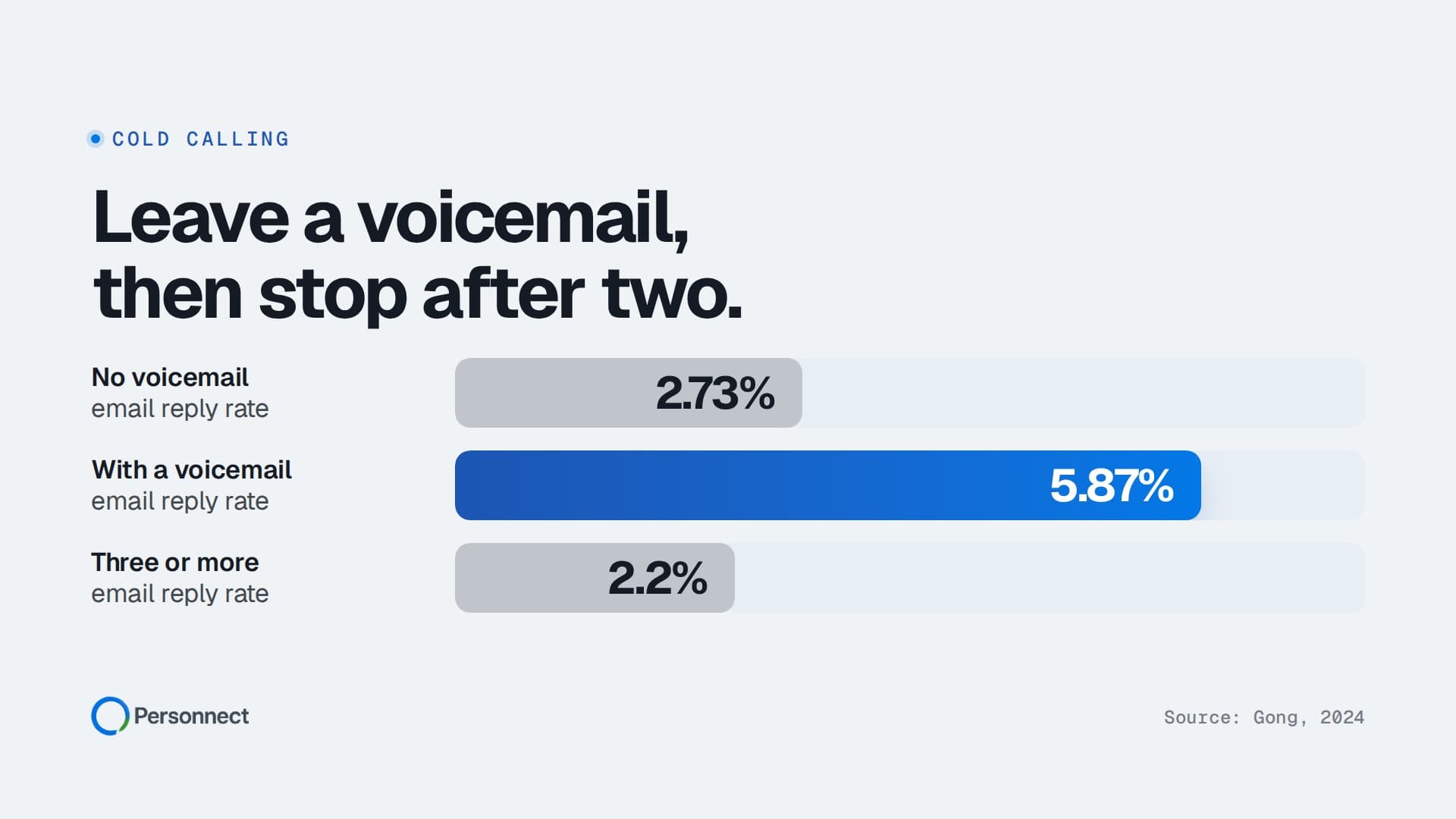
What to do with the voicemails you do reach is its own decision. Whether to leave a voicemail on a cold call covers when a message pays off and when to hang up.
Which fix should you try first?
Start with the test call, because it costs nothing and rules out the cause you can't see from your dialer. Call your own outbound number from three or four phones on different carriers and note what each screen shows. If one shows a warning, rest that number and move on with the clean ones.
Next, pull a week of calls and sort them by what you heard: no ring, half a ring, full rings, company greeting. Whichever bucket is biggest tells you where the time is going. A pile of company greetings means the data needs direct dials. A pile of half rings at the same hour means the schedule needs to move. A pile of silence from one number points back to the label. Fix that bucket first, run another week, and sort again. When the biggest bucket shrinks, the next one tells you what to work on.
Frequently Asked Questions
Why does my call go straight to voicemail without ringing even once?
The phone is usually off, out of coverage, in airplane mode, or set to silence numbers it doesn't recognise. On an iPhone, the Silence option for unknown callers sends those calls straight to voicemail (Apple Support, 2026). Try again at another time or from a different number before you assume the number is dead.
Does a single short ring before voicemail mean they declined my call?
Often, yes. A short ring followed by the greeting usually means the person pressed decline or was already on another call. It can also mean a spam label made the decision easy. If the same contact does this at different times of day, test how your number displays on a few phones.
Can a parallel dialer stop calls from going to voicemail?
No dialer changes the prospect's phone settings, so some calls will still land in voicemail. What changes is the cost. Personnect dials up to five lines at once per rep, detects and skips voicemail, and connects the rep the moment a person answers, so a string of greetings doesn't eat the calling block.
How many voicemails per day is normal for an SDR?
A lot, even for strong reps. Gong's analysis of over 300 million cold calls found the average rep needs about 19 dials for one conversation (Gong, 2024). If your share is far worse than that, work through the diagnostic table in this post to find the cause.
Sources
- Pew Research Center pewresearch.org/short-reads/2020/12/14/most-americans-dont-answer-cellphone-calls-from-unknown-numbers
- Apple Support support.apple.com/en-us/111106
- Apple Support support.apple.com/en-us/105112
- Google Phone app Help support.google.com/phoneapp/answer/9118387?hl=en
- Federal Trade Commission ftc.gov/reports/national-do-not-call-registry-data-book-fiscal-year-2024
- Gong gong.io/resources/labs/the-hidden-power-of-cold-calling-insights-from-300m-calls
- Federal Communications Commission docs.fcc.gov/public/attachments/DOC-415059A1.pdf
- Apple Support support.apple.com/guide/iphone/allow-or-silence-notifications-for-a-focus-iph21d43af5b/ios