Parallel & power dialing
How the different kinds of dialers work, and how teams get more conversations out of an hour of calling.
A power dialer calls numbers from a list so reps never type one. A parallel dialer calls several at once and connects the rep to whoever answers. These posts explain the differences, what happens to voicemail greetings, and how teams plan their calling blocks.
What Is Answering Machine Detection (AMD)? The 2-Second Window Behind Every Outbound Dial
What is answering machine detection? AMD classifies a call as person or recording, and federal rules give it just 2 seconds to decide. Types, accuracy, errors.
What Is a Power Dialer? How 44 Dials a Day Turns Into 4.1 Conversations
What is a power dialer? It auto-dials one number per rep, lifting the median SDR's 44 dials and 4.1 conversations a day. How it works, plus limits.
Parallel Dialer vs Power Dialer: Which Connects More?
Parallel dialer vs power dialer: with only ~4.8% of cold calls connecting (Cognism, 2024), see which dialer surfaces more live conversations per rep-hour.
Power Dialer vs Auto Dialer vs Predictive Dialer: What's the Difference?
Power dialer vs auto dialer vs predictive dialer, explained. With B2B connect rates near 4.8%, the type you pick decides your real conversations.
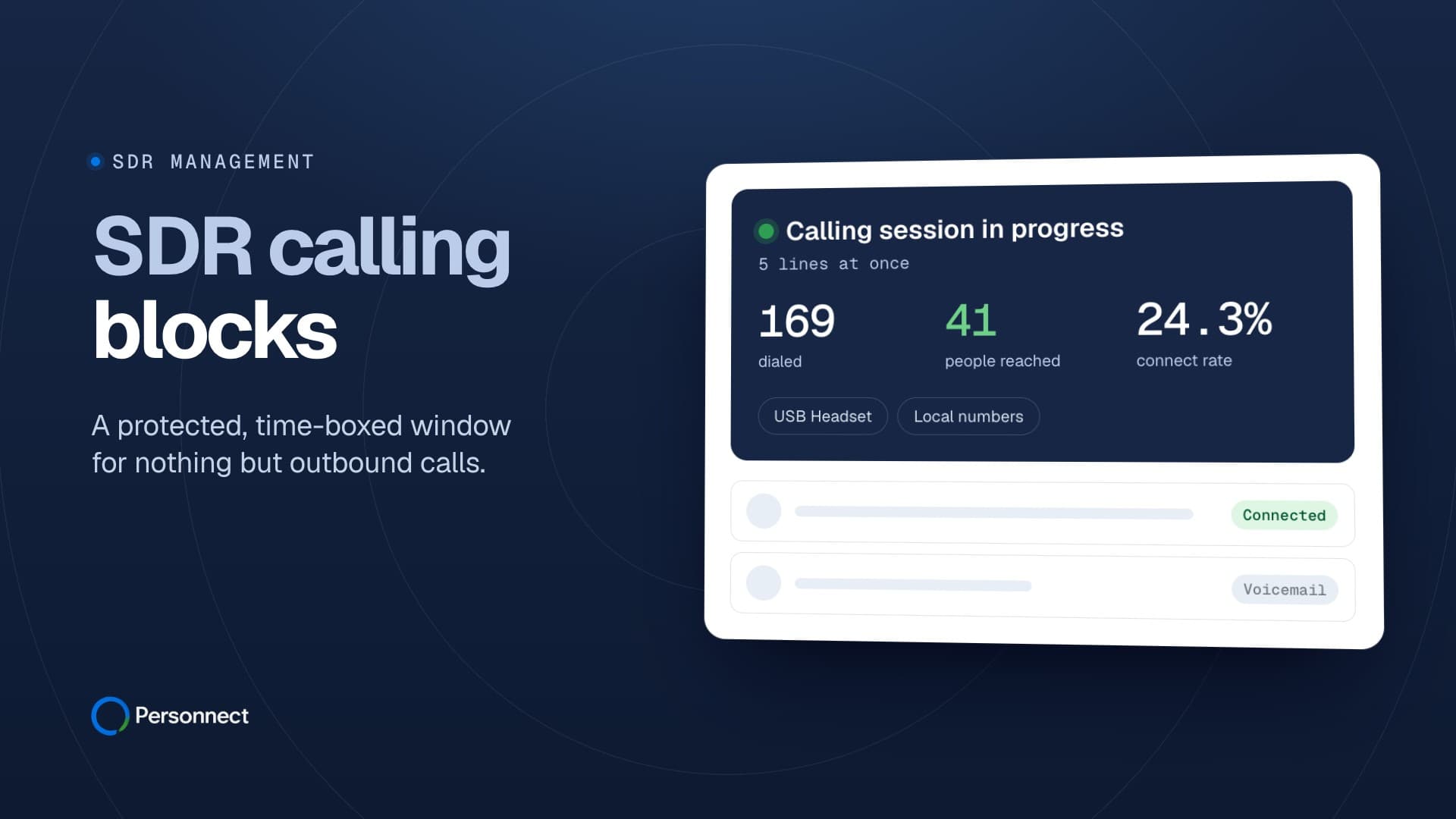
How Top SDR Teams Structure Their Calling Blocks
The SDR calling block schedule top teams use: how long, how many, when to run them, and what to measure. Block structure beats raw dial volume.
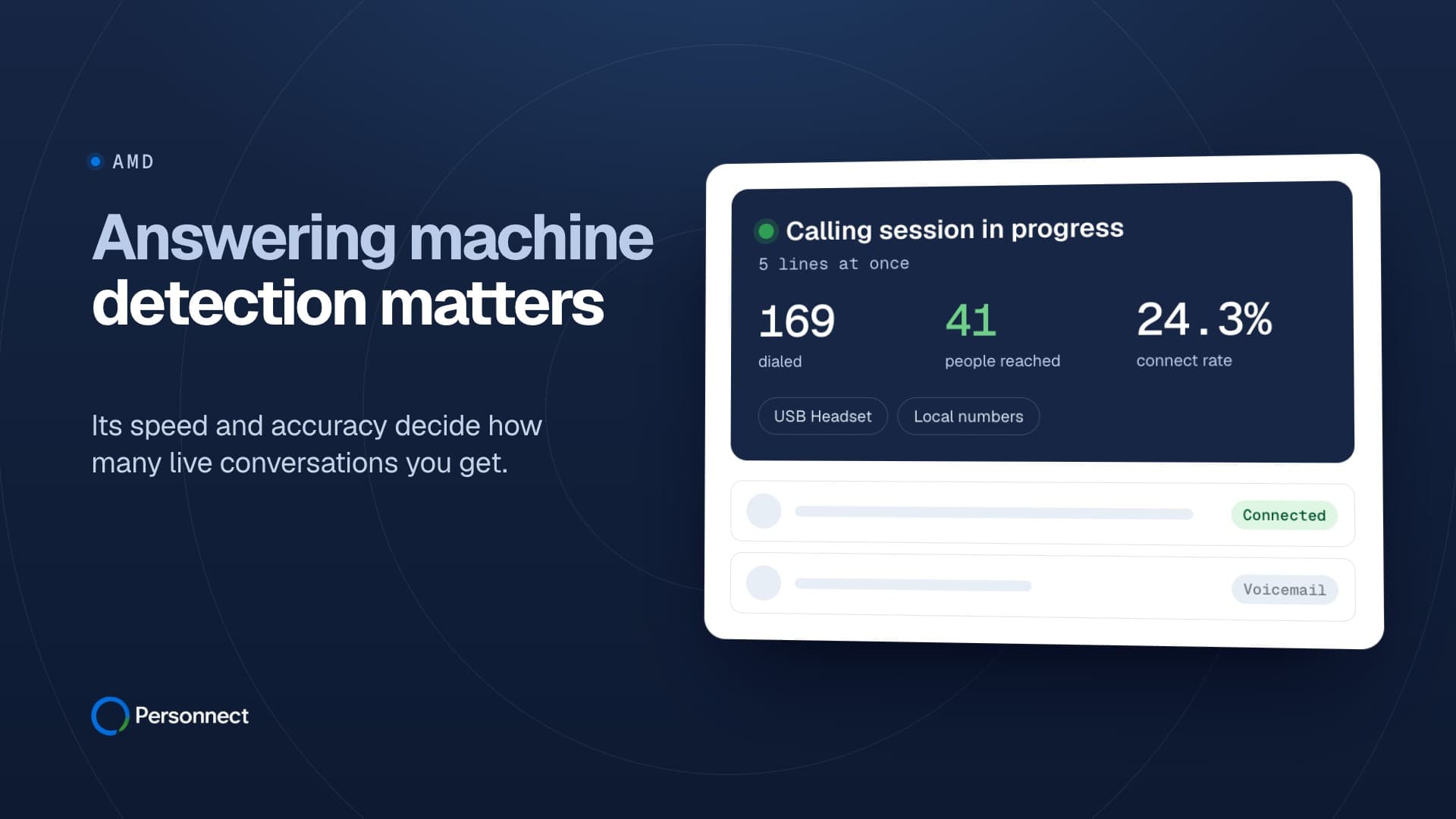
Why Answering Machine Detection Matters More Than You Think
80% of outbound B2B calls hit voicemail. Learn how AMD speed and accuracy impact connect rates, rep morale, and what benchmarks to demand from your dialer.
Why Most Sales Dialers Waste 60% of Your Team's Time
Sales reps spend only 28% of their time selling. Learn why faster dialing won't fix it and what verification-first outbound means for your connect rates.