
How Top SDR Teams Structure Their Calling Blocks
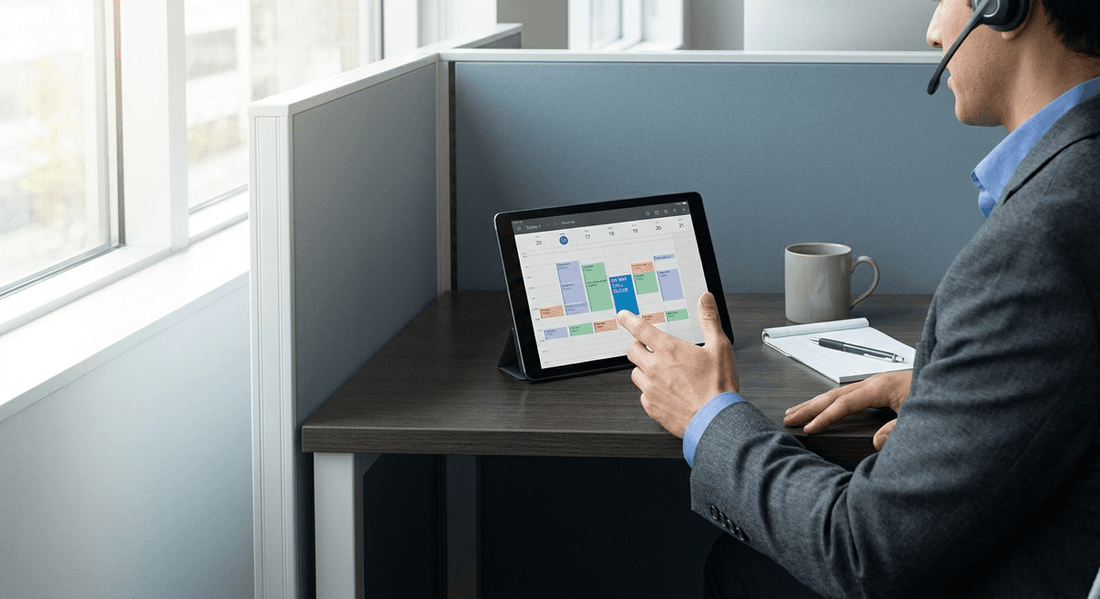
Sales reps spend only 28% of their time actually selling, according to Salesforce's State of Sales report. The other 72% gets eaten by admin work, internal meetings, list cleanup, and the slow drip of context switching between tools. That ratio has barely moved in five years, despite a decade of "productivity" software promising to fix it.
One operating habit consistently moves the needle on that 28%, and it costs nothing to implement: the calling block. A protected, time-boxed window where an SDR does nothing but make outbound calls. No inbox, no Slack, no list research, no follow-up emails. Just dialing.
Top-performing SDR teams treat calling blocks the way trading desks treat market open. Everything else gets scheduled around them. The reps who hit quota defend two or three solid blocks on their calendar. The reps who miss tend to scatter dials across the day in five-call bursts between Slack messages.
This article breaks down what an SDR calling block schedule looks like at high-performing teams, why the structure beats raw dial volume, and the mistakes that quietly destroy block effectiveness.
Why does blocking beat scattered dialing?
The case for blocks rests on three pieces of research.
Context switching is the silent killer. A study from the University of California, Irvine found knowledge workers switch tasks roughly every three minutes, and it takes more than 20 minutes to return to focused attention after an interruption. For an SDR, every Slack ping, every CRM tab, every "quick" inbox check between calls is a 20-minute attention tax. Make 50 dials across a scattered day and you have effectively never reached full focus.
Calling is an emotional skill. Cold conversations require energy, presence, and the ability to read a stranger's voice in the first three seconds. A rep on dial eight in a row is sharper than the same rep on dial one after lunch. Momentum compounds. Stopping and restarting kills it.
Rejection processing requires bulk. Bridge Group's 2023 SDR Metrics Report found the average SDR connect rate sits between 3% and 5%, meaning 50 dials produce two or three live conversations. Spread those 50 dials across eight hours and every "no" feels like a verdict on the day. Compress them into 60 minutes and the misses turn into a pattern, the hits into proof the pattern breaks. Same math, different psychology.
There is a quieter fourth benefit: list discipline stays intact. Reps dialing sporadically pick the easy names first, and the awkward ones never get called. Inside a block, the rep works the list in order. That is the difference between a team that calls its top 100 accounts and a team that calls its top 30.
How long should a calling block be, and how many per day?
There is no perfect number, but the research and the playbooks converge on a tight range.
Typical block length: 45 to 90 minutes. Shorter than 45 and the warm-up cost dominates. Longer than 90 and voice fatigue plus mental drift outweigh the momentum gain. Most teams settle around 60 minutes. Outreach published a benchmark in 2023 showing top-quartile SDRs averaged 60 to 75 minutes per block.
Typical daily volume: two to three blocks. Some elite teams run four, but four requires clean lists and almost zero admin burden, which is rare. Two solid blocks of 60 to 75 minutes each, properly executed, will out-produce six hours of scattered dialing.
Typical timing. Research from CallHippo and InsideSales/XANT points to two prime windows for B2B outbound: 10 a.m. to 11:30 a.m. and 4 p.m. to 5 p.m. in the prospect's local time. Tuesday, Wednesday, and Thursday outperform Monday and Friday. The worst window is 1 p.m. to 2 p.m., when prospects are at lunch or in the post-lunch slump.
A healthy day shapes up roughly like this:
- 9:00 to 10:00, list prep and sequence cleanup
- 10:00 to 11:15, Block 1
- 11:15 to 12:00, follow-up emails and callbacks
- 12:00 to 1:30, lunch and admin
- 1:30 to 4:00, deep prospecting, sequencing, inbox
- 4:00 to 5:00, Block 2
- 5:00 to 5:30, plan tomorrow
The key principle: two blocks inside prime windows, with prep done before the block and admin pushed outside it.
What goes inside the block, and what stays outside?
This is where most teams quietly sabotage themselves. A block only works if the rep is doing one thing. The moment "calling and also a few quick replies" becomes acceptable, the block has degraded into scattered dialing in a fancy time slot.
Inside the block.
- Dial the prepped list, in order.
- Take notes only in a single dedicated field or voice memo.
- Use a script or talk track, not freestyle outreach.
- Handle live objections in the moment.
Outside the block.
- Research and account prep. If you have to look something up mid-call, the list was not ready.
- Sequencing and email writing. Different cognitive mode, different energy budget.
- Inbox and Slack. Notifications off, browser tab closed, phone face-down.
- CRM admin and disposition cleanup. Modern dialers should handle this; if yours does not, batch it into a separate window.
- Internal meetings. A block on the calendar should be invite-blocking the way a customer demo is.
The hardest one is research. Reps convince themselves that "just looking up this one thing" mid-block is fine. It is not. A 90-second LinkedIn detour costs the rep the next five dials because the brain has switched modes. Pre-block list prep is the single most valuable habit in the SDR week.
This is also where modern dialing tooling earns its keep. The point of a verified contact list, automatic call logging, and CRM sync is precisely to remove the off-task work that used to live inside the calling hour. Platforms like Personnect were built around the idea that every dial should produce verified data automatically, including on unanswered calls, so the rep never has to break flow to check whether a number is still good or to log what happened on the call. The block stays a block.
How should a calling block be measured?
Dial count is the wrong metric. It is the easiest to track, which is why every dashboard defaults to it, and it is also the one most likely to produce gaming behavior. A rep can hit 80 dials in an hour by burning through a list of voicemails and disconnected lines without producing a single conversation.
The metrics that actually predict pipeline are downstream of the dial.
Connect rate. Percentage of dials that reach a live person. Industry average sits at 3% to 5% per Bridge Group. Teams using verified contact data routinely hit 12% to 18% per Cognism and Lusha benchmarks. If your team is at 3% and the block produces two conversations per hour, the bottleneck is not the rep, it is the data.
Conversations per hour. The truth-teller. Top SDRs hit four to six live conversations per calling hour. Average teams hit one to two. Tripling this number, not tripling dial volume, is how teams break out.
Meetings booked per hour of dialing. The cleanest output metric. Top performers in mid-market outbound land around 0.5 to 1 meeting per calling hour, lower in enterprise.
Talk-to-listen ratio. Gong's public research shows top-performing reps maintain a 43% to 57% talk-to-listen ratio. Reps who dominate the call over 65% book fewer meetings. Reps under 35% lose authority.
Useful framing: measure the block by what came out of it, not by how loud it was. Twenty dials that produced four conversations and two meetings is a better block than 80 dials that produced one of each.
How does tooling shape block effectiveness?
Most calling-block failure modes are infrastructure problems wearing a behavioral mask.
Bad data turns a 60-minute block into 15 minutes of conversations and 45 minutes of voicemails. With 27% of B2B contact data going bad every year per Dun and Bradstreet, and 40% to 60% of phone numbers decaying within 12 months per ZoomInfo and Gartner, the block hits the same wall regardless of rep skill. Verification at the moment of dial, not at the moment of list purchase, is what keeps the block productive as the list ages.
Manual call logging is the block's worst enemy. A 2024 Sales Hacker survey found 54% of reps admit to skipping or deferring CRM updates, and 37% acknowledge their notes are inconsistent. The rep who pauses to log mid-block loses the next dial. The rep who batches everything for end-of-day produces unreliable data. Auto-logged transcripts, dispositions, and sentiment syncing directly to the CRM are the only way to keep the block clean and the pipeline data accurate. Personnect, for example, syncs more than 20 data points per call automatically across 30-plus CRM integrations, which is the plumbing that lets a rep stay in the block instead of bouncing out every two dials.
Slow voicemail detection bleeds the block. A dialer that takes four to seven seconds to recognize a voicemail greeting wastes 30 to 50 minutes per block at typical cadence. Sub-second voicemail detection is the difference between 40 and 60 dials in the same hour.
Spam-flagged caller ID kills connect rate before the block starts. If your numbers are tagged "Scam Likely" by carrier filters, the block can be flawless and still produce a 1% connect rate. Number health, automatic rotation, and local-presence calling that matches the prospect's area code pay off inside every block from day one. Personnect manages this layer by registering numbers in the company's name and rotating them automatically, which is the kind of background work the rep should never have to think about.
The modern calling block is defined by what the rep does not have to do. Every task absorbed by tooling is a context switch the rep no longer pays for.
What are the most common calling-block mistakes?
The same handful of failure modes show up over and over.
1. Multitasking inside the block. "I'll just answer this one Slack" is the start of the unraveling. Notifications off. Phone face-down.
2. Scheduling blocks at the wrong time. 1 p.m. blocks, Friday afternoon blocks, 8 a.m. blocks before the prospect is at their desk. Use historical connect-rate data to pick windows, not rep preference.
3. Skipping list prep. If the rep is researching the next account inside the block, the block has failed before it started. Prep is a night-before or first-thing-morning task.
4. Measuring by dial count only. This rewards burning through bad numbers. Measure conversations per hour, connect rate, and meetings booked.
5. Letting managers schedule meetings inside the block. A manager who books a 1:1 over a rep's protected calling hour has signaled the block is not real. Defense comes from the top.
6. No post-block cooldown. Reps who go straight from a 75-minute block into another high-cognition task burn out. Build in 15 to 30 minutes of low-stakes admin or callbacks after the block.
7. Letting one bad block reshape the next. Every SDR has a 60-minute block with zero conversations. End it, fix whatever broke (list, time of day, talk track), and protect the next one as scheduled.
The pattern across all seven: calling blocks fail when they are negotiated, not protected.
What does a great SDR calling block schedule look like in practice?
A repeatable, sustainable week tends to look like this.
Monday. One block, late morning. Mondays are low-connect days, so use the afternoon for sequencing and account planning. Some teams skip Monday blocks entirely and book the time for territory work.
Tuesday, Wednesday, Thursday. Two blocks each. Morning block roughly 10 a.m. to 11:15 a.m., afternoon block roughly 4 p.m. to 5 p.m. These are the heaviest pipeline days.
Friday. One block, morning only. Friday afternoons are dead for B2B outbound. Use the back half of the day for pipeline review, CRM hygiene, and prep for Monday.
Weekly totals. Roughly 9 to 11 calling hours, producing 35 to 60 conversations and 6 to 12 meetings booked for a strong SDR. That is far less calling time than scattered-dial teams clock, and far more output.
The takeaway is not "call more." It is "call inside a structure that lets the call work." Every dial counts only if the infrastructure around the dial lets the rep have a conversation when someone picks up.
FAQ
How long should an SDR calling block be?
Most high-performing teams run blocks of 45 to 90 minutes, with 60 to 75 minutes as the sweet spot. Shorter than 45 and the warm-up cost dominates. Longer than 90 and voice fatigue plus mental drift erode the momentum benefit. Two blocks per day is typical; three is achievable for teams with clean lists and minimal admin burden.
What is the best time of day to schedule a calling block?
Research from CallHippo and InsideSales points to two windows: roughly 10 a.m. to 11:30 a.m. and 4 p.m. to 5 p.m. in the prospect's local time. Tuesday, Wednesday, and Thursday outperform Monday and Friday. Avoid 1 p.m. to 2 p.m., when prospects are at lunch or post-lunch low.
Should calling blocks measure dials or conversations?
Conversations, every time. Dial count is easy to game and the least correlated with pipeline. The numbers that predict outcomes are connect rate, conversations per hour, and meetings booked per hour. A 20-dial block that produced four conversations beats an 80-dial block that produced one.
How do calling blocks help with SDR burnout?
By concentrating rejection into a defined window and surrounding it with non-calling work, blocks change the psychology of the day. Reps experience the same number of "no" responses, but in bulk, where they pattern-match instead of feeling like a verdict on every minute. Higher connect rates inside the block, driven by verified contact data and healthy caller ID, also reduce the ratio of dead numbers to real conversations, which is the largest underlying driver of burnout.
What tooling matters most for a productive calling block?
Three things, in order. First, a verified contact list so dials reach real people; verification on every call, not just at list purchase, keeps connect rates from decaying as the list ages. Second, healthy caller IDs that are not spam-flagged, plus local-presence calling. Third, automatic call logging and CRM sync so the rep never breaks flow to record what happened. Personnect bundles these jobs into one workflow, including verification on every dial, dedicated number management, and over 20 data points synced automatically per call.
How many calling blocks per week is realistic?
A sustainable cadence is 8 to 11 blocks, weighted Tuesday through Thursday with lighter calling on Monday and Friday. That works out to roughly 9 to 11 calling hours per week. Past 12 hours, returns diminish quickly: voice fatigue rises, conversation quality drops, and volume rarely beats the loss in connection quality.