
Why Most Sales Dialers Waste 60% of Your Team's Time

The 60% Problem
Your sales team picked up the phone 50 times today. Of those dials, roughly 30 went absolutely nowhere: disconnected numbers, wrong contacts, endless voicemail boxes nobody checks. That's not a bad day. That's a normal one.
Sales reps spend only 28% of their time actually selling (Salesforce State of Sales, 2024). The rest disappears into admin work, bad data, and calls that never connect. Most sales dialers promise to fix this by dialing faster. But speed doesn't solve the problem when 60% of your numbers are wrong in the first place.
This article breaks down where your reps' time actually goes, why traditional dialers can't fix it, and what the math looks like when you clean up the data before you dial.
Key Takeaways
- Bad data costs organizations $12.9 million per year (Gartner, 2024)
- Verified contact data lifts connect rates from 3-5% to 12-18%
- Faster dialing without data quality just accelerates waste
- Every $1 spent on data quality returns $4-8 in productivity
How Much Time Are Your Reps Actually Losing?
The average SDR makes 45-60 dials per day and connects on only 3-5% of those calls (Bridge Group SDR Metrics, 2024). That means out of 50 dials, a rep might have two or three real conversations. The rest of the day is burned on numbers that were never going to pick up.
The Hidden Cost of Bad Numbers
Here's where it gets expensive. 27% of B2B contact data goes bad every year (Dun and Bradstreet). People change jobs, switch phone numbers, and let old lines expire. Within 12 months, 40-60% of phone numbers in a typical B2B database have decayed (ZoomInfo/Gartner).
Your reps don't know which numbers are dead until they dial them. Each failed call takes 30-60 seconds, including the ring time, the voicemail prompt, and the CRM note. Multiply that across a team of ten SDRs, and the waste compounds fast.
The Dollar Figure Nobody Talks About
Bad data costs organizations an average of $12.9 million annually (Gartner, 2024). That's not just a sales problem. It ripples through marketing, operations, and customer success. But for sales teams specifically, the cost shows up as lost hours.
Sales teams lose approximately 546 hours per rep per year chasing bad leads (Salesforce/Forrester). That's more than 13 full work weeks. Imagine giving every rep on your team three extra months of selling time. What would that do to your pipeline?
📊 Where Your Dials Actually Go (per 100 calls)
- 35% → Voicemail
- 25% → Disconnected or wrong number
- 16% → Rings, no answer
- 15% → Gatekeeper or wrong person
- 5% → Connected, not interested
- 4% → Qualified conversation
Reps also spend 4.5 hours per week leaving voicemails that are never returned (InsideSales/XANT). That's nearly a full day each week spent talking to machines. Most sales leaders accept this as normal. It shouldn't be.
Why Faster Dialing Doesn't Mean Better Results
Power dialers increase talk time by 200-300% compared to manual dialing (PhoneBurner/Kixie). On paper, that sounds like a massive improvement. And it is, if the numbers you're dialing are valid. But what happens when you triple the speed of dialing into a database where half the numbers are dead?
You get to the wrong answer three times faster.
Speed Versus Efficiency
Traditional dialers solve a real problem: manual dialing is slow. A rep copying numbers from a spreadsheet, punching them in, and waiting for the ring wastes valuable seconds on every attempt. Auto-dialers and power dialers eliminate that friction, and they deserve credit for it.
But the underlying assumption is flawed. These tools assume the data is good. They assume the number will ring. They assume someone might pick up. When those assumptions fail, and they fail on 60% of dials, speed becomes irrelevant.
Think of it this way. Would you buy a faster car to drive down a road full of potholes? Or would you fix the road first?
The Diminishing Returns of Volume
Some teams respond to low connect rates by simply increasing volume. If only 3% of calls connect, the logic goes, just make more calls. Push reps to 80, 100, even 150 dials per day.
This creates two problems. First, rep burnout. Hearing "this number is no longer in service" dozens of times per day grinds down even the most resilient salespeople. Turnover increases, and hiring costs spike. Second, it doesn't actually move the needle. Doubling dials from 50 to 100 at a 3% connect rate gives you six conversations instead of three. Cleaning up the data to hit a 15% connect rate on 50 dials gives you seven or eight, with half the effort.
Which approach sounds more sustainable?
What Happens Between "Dial" and "No Answer"?
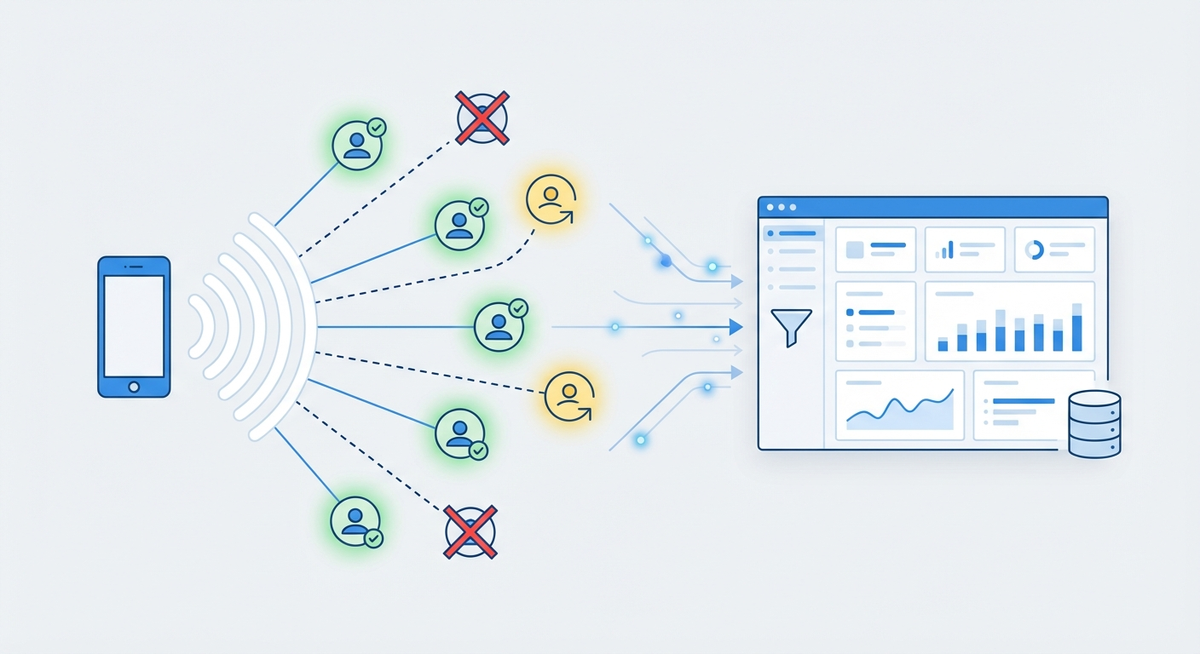
Between the moment a rep clicks "dial" and hears silence, there's a gap most sales tools ignore entirely. That gap, the space between dialing and not connecting, contains valuable intelligence. Teams using verified contact data see 12-18% connect rates compared to the 3-5% industry average (Cognism/Lusha). The difference comes from what happens before the call.
The Verification Gap
Most sales workflows treat dialing as step one. Find a list, load it into the dialer, start calling. Verification, if it happens at all, is an afterthought. Maybe someone spot-checks a few numbers. Maybe the data provider claims the list was "recently updated." But systematic verification before dialing remains rare.
This gap costs more than most teams realize. Every unverified number that turns out to be disconnected isn't just a wasted dial. It's wasted research time, wasted CRM entry time, and wasted emotional energy for the rep who prepared for that conversation.
Unanswered Calls as Intelligence
Here's a perspective shift worth considering. An unanswered call isn't just a failure. It's data. The question is whether your tools capture and use that data, or simply move to the next number.
When a call goes to a generic voicemail, that tells you something different than a "number disconnected" message. A ring with no answer at 9 AM suggests a different follow-up strategy than the same result at 3 PM. A number that connects to a different person's voicemail means the contact has moved on.
Smart outbound teams treat these signals as inputs for their next action. They don't just log "no answer" and move on. They update the record, flag the number for verification, and adjust their approach. But doing this manually is impractical at scale. It requires systems that can process call outcomes and feed them back into the data layer automatically.
The Math Behind Verified Outbound
Let's put concrete numbers to this. Consider a team of 10 SDRs, each making 50 dials per day, working 22 days per month. That's 11,000 dials per month.
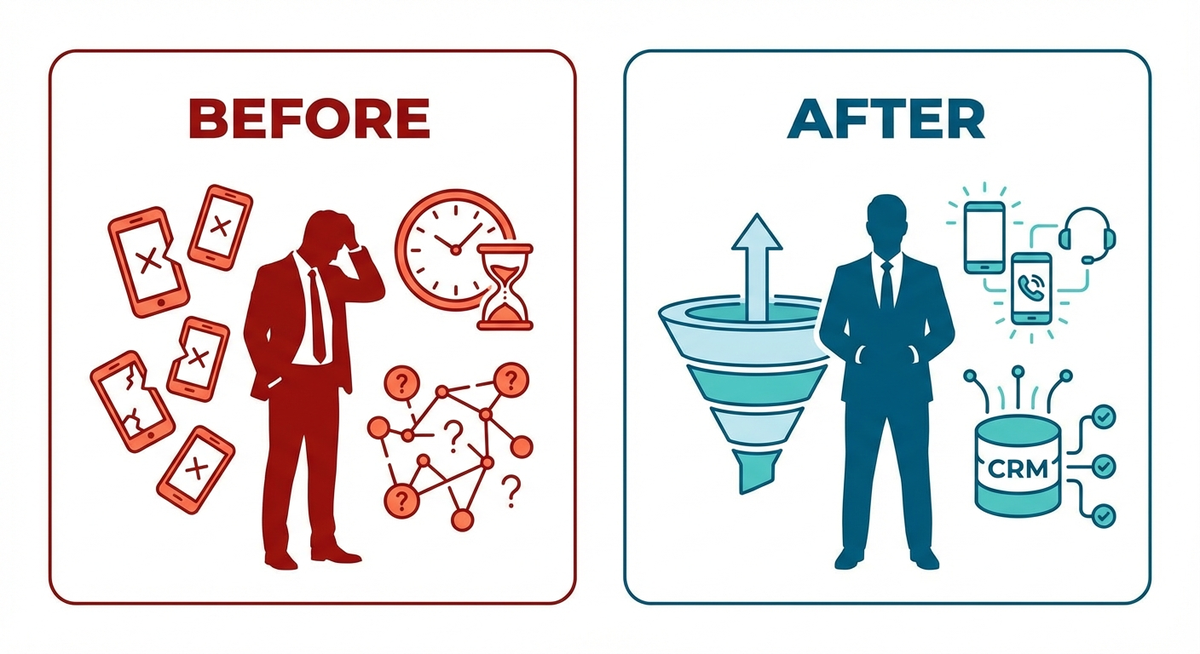
Before Verification
At the industry-average 3-5% connect rate (Bridge Group SDR Metrics, 2024), those 11,000 dials produce 330-550 conversations. The remaining 10,450-10,670 dials are waste: disconnected numbers, wrong contacts, voicemails into the void.
Each rep spends roughly 17 hours per week on non-selling activities related to bad data. That includes 8 hours dialing bad numbers, 3 hours leaving voicemails that won't be returned, 4 hours in actual talk time, and 2 hours on data cleanup and CRM hygiene.
📊 Weekly Time Per Rep: Before vs After Verification
Activity Before After Dialing bad numbers 8 hrs 1 hr Wrong voicemails 3 hrs 0.5 hrs Productive talk time 4 hrs 9 hrs Data cleanup 2 hrs 0 hrs Total productive 4 hrs 9 hrs
After Verification
With verified contact data, connect rates jump to 12-18% (Cognism/Lusha). Those same 11,000 dials now produce 1,320-1,980 conversations. That's a 3-4x increase in meaningful connections without adding a single rep or making a single extra dial.
The weekly time breakdown shifts dramatically. Bad number calls drop from 8 hours to about 1 hour. Wrong voicemails shrink from 3 hours to 30 minutes. Talk time expands from 4 hours to 9 hours. Data cleanup goes to zero because the verification process handles it upstream.
The ROI Calculation
Every $1 invested in data quality returns $4-8 in productivity gains (Forrester TEI). For a 10-person SDR team with an average fully loaded cost of $75,000 per rep, the math works out clearly.
Current waste: 546 hours per rep per year on bad leads (Salesforce/Forrester). At a blended hourly cost of $36, that's roughly $19,600 per rep per year in lost productivity. Across 10 reps, you're looking at $196,000 in annual waste from bad data alone.
Even a 50% reduction in that waste, achievable with proper verification, returns $98,000 per year. Most verification solutions cost a fraction of that. The payback period is measured in weeks, not years.
What Sales Leaders Should Look For in 2026
Companies with strong sales enablement programs achieve a 49% win rate compared to 42.5% without (CSO Insights/Gartner). That 6.5 percentage point gap translates into significant revenue when applied across an entire pipeline. The tools you choose matter, but the criteria for choosing them have shifted.
Beyond Features: Buying Criteria That Matter
The sales tool market is crowded. Every vendor claims higher connect rates, better automation, and smarter analytics. Here's what actually separates effective platforms from noisy ones.
Data verification built in, not bolted on. If verification is a separate step, a separate vendor, or a separate budget line, it won't get done consistently. Look for platforms where verification is part of the core workflow, not an add-on.
Outcome tracking beyond "connected." A good tool doesn't just tell you whether someone picked up. It tracks what happened next. Did the conversation advance? Was the contact qualified? This feedback loop is what turns raw dials into pipeline intelligence.
Rep experience that reduces friction. Your SDRs are the people using this tool eight hours a day. If it's clunky, slow, or confusing, adoption drops and you're back to spreadsheets within a month. Prioritize tools your reps will actually want to use.
The Verification-First Mindset
The shift happening in outbound sales isn't about faster dialers or smarter AI scripts. It's about data quality as a prerequisite, not an afterthought. The teams winning in 2026 are the ones that verify before they dial, learn from every call outcome, and feed that intelligence back into their process.
This isn't a technology problem. It's a workflow problem. And solving it starts with asking a simple question: how many of the numbers in your database are actually valid right now?
If you don't know the answer, that's the first thing to fix. Tools like Personnect's sales enablement platform are designed around this verification-first approach, but regardless of which solution you choose, the principle remains the same. Clean data first, then dial.
Frequently Asked Questions
What is a good connect rate for outbound sales calls?
The industry average sits at 3-5% for cold outbound calls (Bridge Group SDR Metrics, 2024). Teams using verified contact data consistently reach 12-18% connect rates. A "good" rate depends on your industry and buyer persona, but anything below 5% signals a data quality issue worth investigating.
How often should sales teams verify their contact data?
Given that 27% of B2B contact data decays annually (Dun and Bradstreet), quarterly verification is the minimum. High-volume teams should verify weekly or integrate real-time verification into their dialing workflow. The more frequently you verify, the less time reps waste on dead numbers.
Do power dialers still make sense if my data is bad?
Power dialers increase talk time by 200-300% versus manual dialing (PhoneBurner/Kixie), so they're still valuable. But without clean data, you're amplifying the waste. The best approach combines a power dialer with verified data, so the speed boost applies to numbers that will actually connect.
How do I calculate the cost of bad data for my team?
Start with hours lost. Multiply your rep count by 546 hours per year (Salesforce/Forrester), then multiply by your blended hourly cost. For a 10-rep team at $36/hour, that's roughly $196,000 annually. Add the opportunity cost of missed conversations, and the real number is likely higher.
What's the difference between a sales dialer and a sales enablement platform?
A dialer automates the act of placing calls. A sales enablement platform wraps verification, analytics, coaching, and workflow automation around the entire outbound process. The dialer is one component. Enablement is the strategy that makes every dial count.
Conclusion
The 60% problem isn't going away on its own. As contact data decays faster and buyers become harder to reach, the gap between dialing and connecting will only widen for teams that don't address it.
The solution isn't more dials. It isn't faster dials. It's smarter dials, ones backed by verified data and informed by the outcomes of every previous attempt.
Sales teams that fix their data before they pick up the phone consistently outperform those that don't. The math is clear: verified outbound delivers 3-4x more conversations from the same number of dials, without burning out your reps or inflating your headcount.
The question isn't whether you can afford to invest in data quality. It's whether you can afford not to.