
Power Dialer vs Auto Dialer vs Predictive Dialer: What's the Difference?
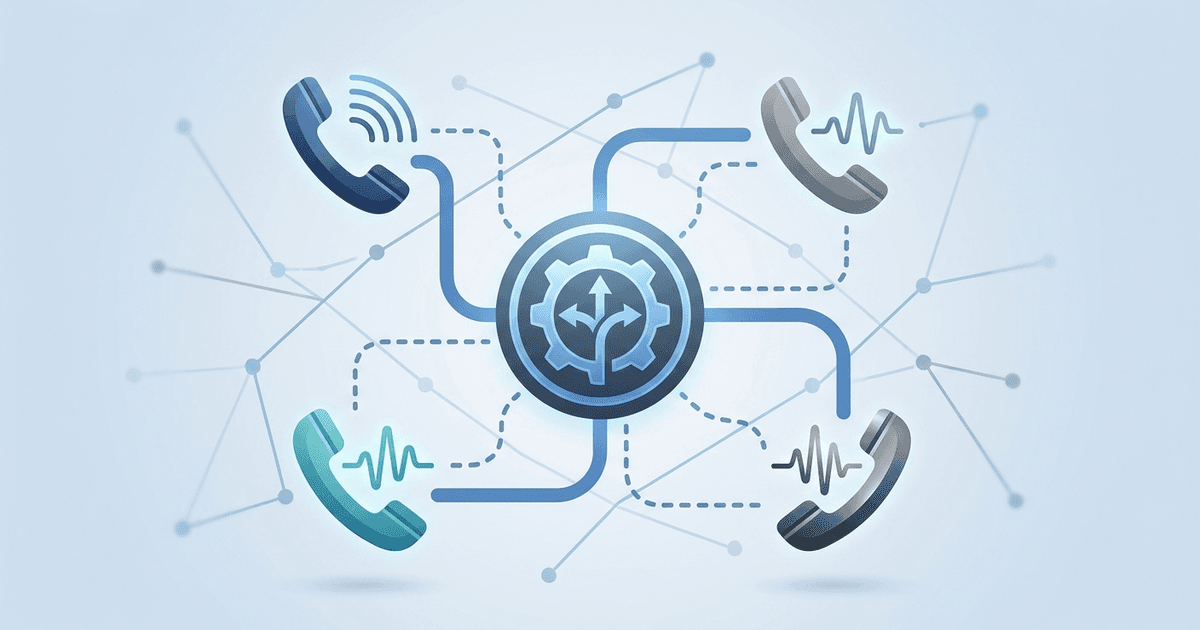
The median B2B cold-call connect rate sits at roughly 4.8% (Cognism, 2024), which means your reps burn through a lot of dials to find a live person. The dialer you put in front of them decides how much of that effort turns into conversations instead of dead time. Here's the quick orientation: "auto dialer" is the umbrella term for any system that places calls for you. A power dialer rings one number at a time per rep and only connects when someone answers. A predictive dialer dials ahead of rep availability using an algorithm, which is the type historically tied to abandoned calls. A parallel dialer rings several lines for one rep and hands them the first live answer. Personnect is a focused parallel / power dialer that calls up to 5 prospects at once and is built around connect rate, meaning more live conversations per rep-hour on data that's actually real.
Key Takeaways
- "Auto dialer" is a category, not one product; power, predictive, and parallel dialers are all kinds of auto dialer.
- A power dialer keeps a real person on every connected call, so there are no abandoned calls; a predictive dialer dials ahead of agents, which is why regulators cap its abandonment rate.
- A parallel dialer gives one rep power-dialer throughput by ringing several lines and connecting the first answer, without an autodial-the-masses model.
- Connect rate, not dial count, is the metric that moves pipeline. Median B2B connect rate is about 4.8% (Cognism, 2024), so squeezing more conversations out of the same list beats dialing harder.
- The most useful dialers verify every call, so even unanswered dials produce data and the next round connects better.
What is an auto dialer?
"Auto dialer" is the broad term for any software that places outbound calls automatically instead of having a rep punch in digits by hand. That's it. Every dialer type below is a flavor of auto dialer, which is why the categories get muddled in vendor marketing. When someone says "we use an auto dialer," they could mean almost anything from a basic preview tool to a high-volume predictive system.
Why manual dialing falls apart at scale
Hand-dialing wastes the most expensive resource you have: rep attention. SDRs already spend only about two hours a day actively selling, with the rest lost to research, logging, and admin (Sales So, 2025). Add the seconds spent reading a number, dialing, and listening to ring tones across 50 to 80 dials a day (Skipcall, 2025) and a chunk of the day goes to mechanics, not conversations.
The shared promise: less idle, more talk
Every auto dialer is trying to close that gap between calls. The difference is how aggressively it closes it, and what tradeoff it accepts to do so. That tradeoff is the whole story, and it's where the three main types split.
Auto dialer as the parent category
Keep this framing as you read on. Power, predictive, and parallel dialers aren't competing with "auto dialers," they are auto dialers. The real question isn't auto versus manual. It's which dialing model fits your list, your team, and the rules you operate under.
How does a power dialer work?
A power dialer places the next call the moment a rep finishes the previous one, one number at a time, per rep. The rep sees the contact's details on screen while the line rings, and the system only connects a call when there's already a person on the line ready to talk.
One line, one rep, one conversation
Because a power dialer never dials more numbers than there are reps to take them, every connected call lands on a real person who's ready. There's no algorithm guessing whether an agent will be free. The rep wraps a call, the next one fires, and they stay in a rhythm.
No abandoned calls by design
This is the structural payoff: a power dialer produces zero abandoned calls. The prospect picks up and a rep is right there. No silence, no "is anyone on the line?" That keeps you clear of the abandoned-call rules that constrain higher-volume dialing, and it protects the experience on the other end.
Where the throughput gain comes from
The lift from a power dialer comes from killing the dead time between calls, not from dialing the masses. You get more conversations per hour than manual dialing because reps stop fumbling with numbers and sitting through ring-out and voicemail. It's a steady, compounding gain, and the foundation parallel dialing builds on.
How does a predictive dialer work?
A predictive dialer uses an algorithm to place multiple calls at once, before agents are free, then routes answered calls to whoever opens up. It studies historical pacing, average handle time, and pickup rates, then tries to time a fresh connection for the moment a rep hangs up.
Dialing ahead of agent availability
The model assumes agent readiness. When the math is right, agents move from live conversation to live conversation with almost no gap, which is why predictive dialers are credited with boosting talk time by roughly 200% to 300% over manual dialing (Voiptime Cloud, 2024).
When the bet is wrong: abandoned calls and dead air
When the algorithm overshoots, a prospect answers and there's no rep to take the call. They hear silence, then a disconnect. That's an abandoned call, and it's exactly the behavior regulators wrote rules around. Under the FCC's telemarketing rules, an outbound call is "abandoned" if a rep doesn't connect within two seconds of the person's greeting, and telemarketers must keep abandonment under 3% of answered calls per campaign over a 30-day window (Federal Register, 2012). The predictive model is the reason those limits exist.
Why it suits very high-volume call centers
Predictive dialing earns its keep in large rooms with many agents calling broad lists, where the law of averages smooths out the pacing and abandonment stays inside the cap. For a lean B2B team working a targeted list, the abandonment exposure and the impersonal dead-air risk usually outweigh the raw volume.
Where does a parallel dialer fit in?
A parallel dialer rings several numbers at the same time for a single rep, then connects that rep to the first live answer and drops the rest. You get power-dialer throughput multiplied across lines, without dialing the masses on an autodial model and without an algorithm guessing at agent availability. This is Personnect's lane: it rings up to 5 prospects at once and connects a rep to whoever answers first.
Several lines, one rep, first answer wins
Instead of one ring-out tying up a rep, the system fires a handful of lines and the rep talks to the first person who says hello. The other ringing lines release. Because there's always exactly one rep behind the cluster, the connected call still lands on a real person ready to talk.
Power-dialer throughput without the predictive tradeoff
Parallel dialing keeps a person on every connected call, the power-dialer property, while multiplying the odds of catching a live answer on any given push. You're not predicting agent readiness because there's no pool of pending calls hunting for a free agent. The rep is the anchor, and the dial cluster works for that one rep.
The one tradeoff to test for yourself
Here's the honest tradeoff: dialing several lines at once can add a brief lag on answer while the system bridges the live call to the rep. It's short, but it exists. The right move is to test it on your own list with your own reps and listen to a sample of connects, because answer behavior varies by list quality, region, and number reputation. Run your own numbers before you decide.
Which dialer connects more conversations?
Throughput only matters if the dials reach real people, and that's where most outbound effort leaks. About 80% of cold calls go to voicemail (Cognism, 2024), and it takes around eight call attempts on average just to reach a prospect (RAIN Group, 2024). More dials per hour is only half the equation. The other half is data.
Connect rate is the lever, not dial count
You can dial harder or you can connect better. Generic, unverified lists land somewhere around 8% to 12% connect rate, while phone-verified data runs closer to 18% to 22%, roughly 3x higher (Cognism, 2024). That gap is bigger than anything a faster dialer alone can deliver, because it changes the denominator of every conversation you're chasing.
Bad data quietly drains every dialer
It gets worse over time. B2B contact data decays at about 22.5% per year (Cognism, 2024), so a list that connected well last quarter is leaking accuracy now. A blazing dialer pointed at stale numbers just reaches voicemail faster. Verification is the fix, and it has to be ongoing.
When even a missed call becomes data
This is the part most dialers ignore. Personnect treats every dial as a chance to learn something, even the ones nobody picks up, and publicly claims 68% of missed calls become verified data. Instead of a voicemail being a dead end, the call confirms or corrects what you know about that contact. That's the "Every Call Counts" idea in practice: the list gets sharper with every push, so the next round connects better.
How do the types compare on number reputation and spam?
Spam labeling has quietly become the biggest tax on outbound. Roughly one-third of outbound numbers get flagged as spam every month, and a "Spam Likely" label can cut answer rates by as much as 80% (Cognism, 2024). It doesn't matter how fast you dial if carriers are burying your caller ID.
Why high-volume models burn numbers faster
Number reputation is partly a function of behavior. The harder and more indiscriminately a single number hammers a region, the faster carriers flag it. High-volume predictive setups on shared number pools are especially prone to torching reputation, which then drags down the very answer rates the volume was supposed to lift.
Managed, company-registered numbers
The neutral, factual compliance point is this: call on managed, company-registered numbers, use answering-machine detection so reps don't waste time, and follow the rules in your jurisdiction. Dedicated, registered numbers rather than shared pools, plus active number-health monitoring, make reputation something you manage rather than something that quietly erodes. Treat this as table stakes, not a recurring worry.
Local presence done responsibly
Calling from a number that matches the prospect's area can lift pickup, but only on a registered, properly managed number you control. Done on rotating shared pools, "local presence" is exactly how numbers get flagged.
What does each dialer cost?
Pricing splits along the same line as the dialing models. Traditional call-center dialers, especially predictive ones, tend to sell per seat, often a few hundred dollars per rep per month, which makes sense when you're staffing a large floor. Usage-based pricing flips that: you pay for what you actually dial.
Per-seat versus usage-based
Per-seat pricing rewards the vendor whether or not your team is productive. Usage-based pricing ties cost to activity, which suits a lean B2B team that wants to scale users without scaling a fixed bill. Neither is automatically cheaper. It depends on how many reps you have and how much they dial.
A usage-based example
Personnect's published pricing is usage-based: $0.085 per minute for calling, numbers from about $1 per month, with unlimited users and no platform fee. That structure means the cost moves with how much your team actually talks, not with how many seats you've licensed.
Cost per conversation is the number that matters
Whatever the sticker model, the figure to compute is cost per conversation, not cost per seat or per minute. A cheaper dialer that connects fewer live people can cost more per real conversation than a pricier one with better connect rates. Model it on your own volume and connect rate before you sign anything.
Side-by-side: auto vs power vs predictive vs parallel
| Auto dialer (umbrella) | Power dialer | Predictive dialer | Parallel dialer | |
|---|---|---|---|---|
| How it dials | Any automated dialing | One line at a time, per rep | Algorithm dials ahead of agents, many lines | Several lines for one rep, first answer wins |
| Abandoned-call risk | Depends on the type | None by design | Yes; capped at 3% by FCC rules | None; one rep always behind the cluster |
| Best for | N/A (category) | Targeted B2B outbound | Very high-volume call centers | Targeted B2B teams wanting more connects |
| Rep experience | Varies | Steady, one conversation at a time | Fast but can feel mechanical | Steady, with possible brief connect lag |
| Throughput | Varies | Higher than manual | Highest raw volume | Power-dialer throughput, multiplied |
Frequently asked questions
What is the difference between a power dialer and an auto dialer?
"Auto dialer" is the umbrella term for any system that places calls automatically; a power dialer is one specific kind. A power dialer rings one number at a time per rep and connects only when someone answers, so it produces no abandoned calls. That precision matters when the median B2B connect rate is about 4.8% (Cognism, 2024).
Are predictive dialers legal?
Yes, predictive dialers are legal, but they're regulated because they dial ahead of agents and can abandon calls. FCC telemarketing rules cap abandonment at 3% of answered calls per campaign and treat a call as abandoned if a rep doesn't connect within two seconds of the greeting (Federal Register, 2012). Compliance means staying inside that limit.
What's the best dialer for a B2B SDR team?
For targeted B2B outbound, a power or parallel dialer usually fits better than a predictive one, because they keep a rep on every connected call and avoid abandonment exposure. With around eight attempts needed to reach a prospect (RAIN Group, 2024), the priority is connecting more of the answers you do get, not maximizing raw dial count.
How does a parallel dialer avoid abandoned calls?
A parallel dialer rings several lines for a single rep and connects that rep to the first live answer, dropping the rest. Because there's always exactly one rep behind every cluster, an answered call lands on a real person ready to talk. Dialing up to 5 lines at once on this model lifts throughput without an autodial-the-masses approach, the way Personnect works.
Does dialer choice affect data quality?
It can, if the dialer captures what happens on every call. Contact data decays about 22.5% per year (Cognism, 2024), so reaching voicemail is constant. A dialer that turns those misses into verified signal keeps the list improving even when prospects don't pick up, instead of treating a voicemail as a dead end.
Which should you choose?
Start from your reality, not the feature list. If you run a large call center working broad lists with many agents, a predictive dialer's raw volume can pay off, provided you keep abandonment under the cap and watch number reputation. If you run a focused B2B outbound team, a power or parallel dialer is usually the better fit: you keep a real person on every connected call, you sidestep abandonment exposure, and you trade a sliver of theoretical volume for conversations that actually land.
But the dialer type is only the frame. The variable that moves pipeline most is connect rate, and connect rate is mostly a data problem. Phone-verified lists connect roughly 3x better than generic ones (Cognism, 2024), and that gap dwarfs the difference between any two dialing models. The strongest setups work both sides: multiply live answers per rep, and verify every call so even the misses sharpen the next round.
So run your own numbers. Pull your current connect rate, your dials per day, and your cost per conversation, then test a sample on each model with your own list. Listen for connect lag, check your number reputation, and watch data quality over a few weeks. The right dialer is the one that produces the most real conversations on your data, not the one with the biggest volume claim on the page.