For fifteen years, every sales leader has quoted the same study. Respond to a web lead in five minutes or you lose. The stat became gospel. Teams built entire routing stacks around it. SLAs were set, dashboards were painted red when a lead sat for six minutes, and SDRs were judged on stopwatch metrics.
The problem in 2026 is not that the five-minute rule is wrong. It is that hitting it no longer wins the deal. Buyers have changed. Response channels have fragmented. The lead who fills out a demo form at 9:03 has already DMed two competitors, read a Reddit thread, and asked ChatGPT to compare vendors by 9:08. Getting a call into their queue within five minutes means almost nothing if the call goes to a wrong number, a disconnected line, or a prospect who switched jobs four months ago and never updated the form.
Speed to lead is not dead because speed stopped mattering. It is dead because speed alone stopped being a differentiator. The new bar is speed to meaningful contact, what some revenue ops leaders are starting to call speed-to-connection: the time it takes to get a verified person into a real conversation with your rep. Everything else is motion.
Key Takeaways
- Leads contacted within 5 minutes are 21x more likely to qualify than those contacted after 30 minutes (InsideSales / Oldroyd, MIT study, 2011, confirmed by Drift 2022)
- The median B2B vendor response time is still 42 hours, and 55 percent of companies never respond to web leads at all (Drift, State of Conversational Sales, 2023)
- A fast response to a stale record goes nowhere, and poor data quality costs the average organization $12.9 million a year (Gartner, 2021)
- Roughly 19 of every 20 B2B cold calls never reach a person, a connect rate of about 4.8 percent (Bridge Group SDR Metrics Report, 2024)
- Job-title and contact data decay at roughly 30 percent per year, rising sharply in downturn years (HubSpot / ZoomInfo benchmarks, 2023)
Why the 5-Minute Rule Was Right (and Why It Is No Longer Enough)
The five-minute rule was right for the buyer conditions of 2011. It stopped being sufficient around 2022. It is not obsolete; it is incomplete.
The Original Research Still Holds
The core finding from James Oldroyd's MIT and InsideSales research, published in 2011 and popularized by Harvard Business Review in "The Short Life of Online Sales Leads," was that companies responding to inbound leads within five minutes were 100 times more likely to reach the prospect than those responding in thirty minutes, and 21 times more likely to qualify them. Drift's subsequent studies across tens of thousands of B2B websites confirmed the curve. The drop-off is not gradual. It is a cliff.
This part of the story has not changed. Attention is still perishable. A buyer who submitted a form is at their highest intent right now, and every minute of silence invites a competitor, a distraction, or a second thought. If your team is not hitting a sub-five-minute SLA on inbound requests, fix that before reading the rest of this article.
What the Rule Quietly Assumed
The old rule assumed three things that are no longer reliable. First, that the contact information on the form was accurate. Second, that the person who filled it out was the decision maker, or close to one. Third, that a single fast call was the primary channel of contact.
All three have eroded. Buyers now submit forms with burner emails to avoid drip campaigns. They route demo requests to procurement or an analyst. They talk to AI research tools before they ever talk to a rep. A five-minute response into any of those scenarios is still a five-minute response, but it is not the same five-minute response that the Oldroyd study measured. The denominator shifted. Hitting the window now gets you into the queue, nothing more.
What Changed: Buyer Behavior in 2026
Buyers in 2026 do not behave like buyers in 2011 or even 2019. Three shifts matter for anyone thinking about speed to lead 2026.
Parallel Vendor Evaluation Is the Default
Gartner's CSO research has documented this for years: B2B buyers now spend only about 17 percent of the total purchase journey talking to any individual vendor's sales team. The rest is independent research, peer conversations, and increasingly, LLM-assisted comparison. By the time a demo form gets filled out, the prospect is usually already evaluating two to five alternatives in parallel.
This does not mean speed stopped mattering. It means speed buys you one seat at a table that already has several chairs. If the call that lands in five minutes is low quality, confusing, or clearly unprepared, the buyer will quietly move on to the vendor whose first touch felt more considered. Fast plus generic loses to slower plus specific.
Phone Answer Rates Keep Dropping
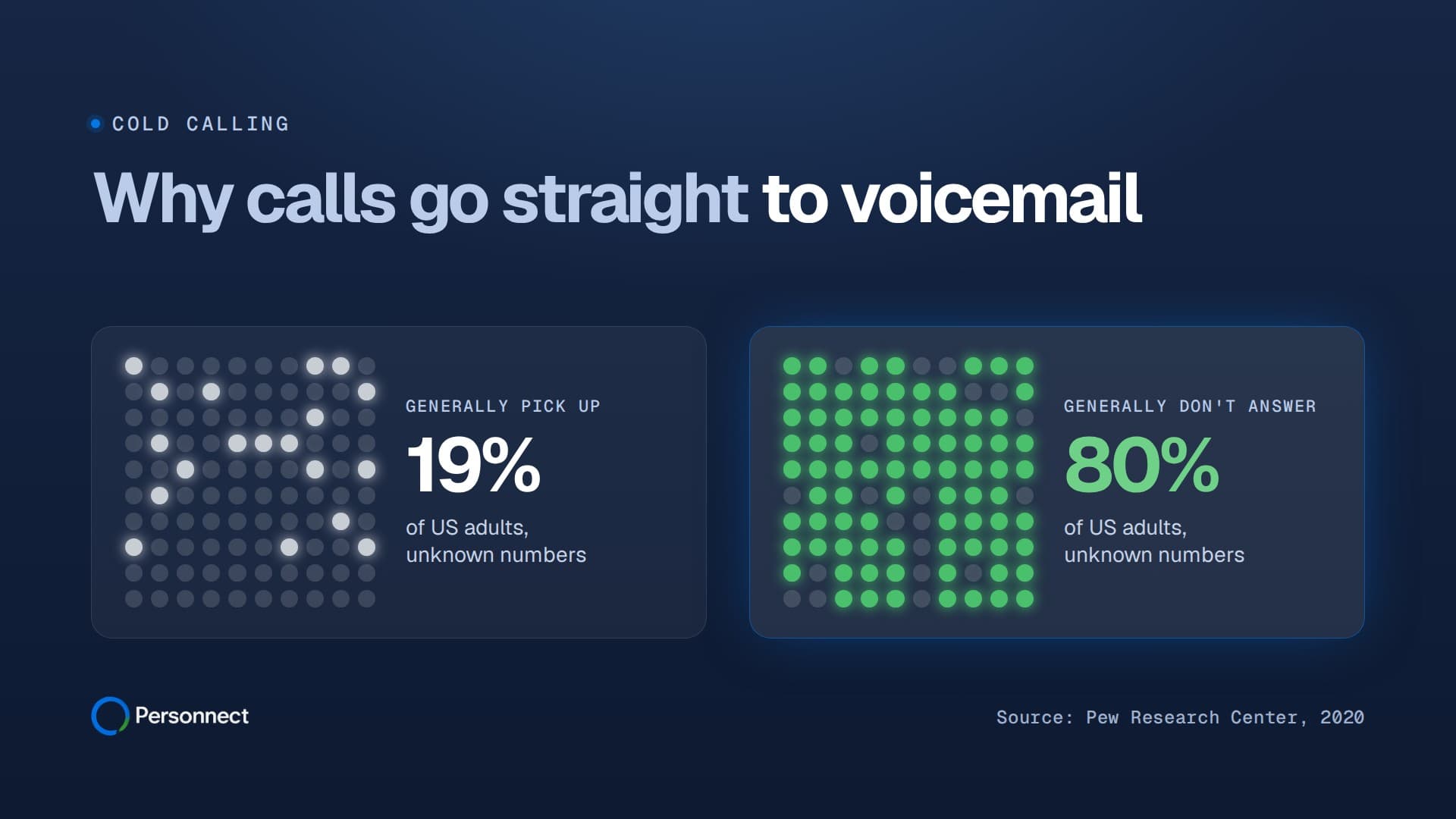
The second shift is ambient. Connect rates on outbound calls have been falling for a decade. Bridge Group's long-running SDR Metrics Report pegs the current B2B average at roughly 4.8 percent, meaning a rep has to dial about 20 numbers to reach one person. Carrier-level spam scoring and mobile screening apps have become aggressive enough that even legitimate sales numbers get flagged within days of heavy use. Speed to lead, on an unverified number with a spam-flagged caller ID, is speed to voicemail.
This is why platforms like Personnect treat number health and verification as first-class problems, so that when a rep dials a fresh lead inside the five-minute window, the call actually rings through to a person who has been confirmed as the right contact.
Data Decays Faster Than Your CRM Refreshes
The third shift is data quality. Business contact data decays at roughly 30 percent per year in normal conditions, higher during layoff cycles. The person who downloaded your white paper in January may have changed jobs by March. A 2021 Gartner estimate put the total cost of poor data quality at an average of $12.9 million per organization per year, most of it hidden in wasted sales and marketing effort. When your speed-to-lead clock starts on a record that is already stale, you are racing to a destination that does not exist.
Speed-to-Connection: The New Metric
Speed-to-connection is the time it takes from signal (inbound form, intent trigger, dial attempt) to a verified person in a real conversation with your rep. It replaces speed to lead as the metric that actually correlates with pipeline.
The Formula in Plain English
Speed-to-connection is not a single number; it is a compound one. It measures four things at once:
- Response latency: how quickly your first outbound action fires.
- Contact accuracy: whether the number or email you have actually reaches the right person.
- Verification: whether the system can confirm the contact's identity on the attempt, including unanswered attempts.
- Context: whether the person on the call has enough information to have a useful conversation.
An SDR team that averages 90 seconds to first dial but reaches a real person only 5 percent of the time has a worse speed-to-connection than a team that averages 4 minutes to first dial but reaches the right person 18 percent of the time. The math is counterintuitive only if you ignore the denominator.
Why Revenue Leaders Are Starting to Track It
Revenue ops teams that measure connect rate alongside response time are finding that the two are not redundant. A team with a great SLA and a poor connect rate is often investing in the wrong place: more routing, more automation, more frantic reminders to SDRs. A team that tracks speed-to-connection tends to reinvest in data verification, number health, and contact enrichment, because those are the levers that move the compound metric.
Why Speed Without Verification Backfires
Speed without verification is not neutral. It actively creates damage.
Spam Flags Are Sticky in Practice
Every time a rep blasts a fresh list of unverified numbers, they add small amounts of spam risk to their caller ID. Carriers use complaint rates, short-duration calls, and non-answered volume as signals. A single rep hammering a bad list in the name of speed can degrade an entire team's answer rate for weeks. The fastest dialer on the market cannot help a number that has been quietly reputation-scored as "Scam Likely."
A sales enablement tool that pairs speed with verification on every call, even unanswered ones, avoids this trap because the signal quality of the outbound pattern stays high. Personnect works from the same idea: unanswered calls still verify your contacts, so teams are not flying blind when they optimize.
Reps Lose Trust in Their Own Lists
The softer cost is cultural. When SDRs dial lists they suspect are junk, their performance degrades even on the good records. Energy drops, scripts get mechanical, and the first twenty seconds of every call sound tentative. Bridge Group and Salesforce State of Sales data have both noted that rep confidence in list quality is one of the strongest predictors of cold calling productivity, more predictive than tenure or training hours. Speed to lead, applied to a list nobody believes in, produces speed to burnout.
The "Right Person" Problem
Even when a number rings through, speed does not guarantee you reached the right person. Phone trees, shared lines, and former employees still answering old extensions all look identical to a basic dialer. Verification systems that confirm whether the line still belongs to the named contact turn a raw dial into a data point. An unanswered call on a verified line is more valuable than a connected call with the wrong person. The first tells you where to invest follow-up. The second wastes a cycle and pollutes the CRM.
What High-Performing Teams Do Differently
The teams quietly pulling ahead in 2026 are not the ones with the strictest five-minute SLAs. They are the ones who redesigned the first touch around connection quality.
They Verify Before and During, Not After
Legacy workflows verify data in nightly enrichment batches or quarterly list hygiene projects. High-performing teams verify at the moment of contact. Every dial, connected or not, updates the contact record in real time: active number, right person, wrong department, job changed, disconnected. The verified person becomes a first-class status in the CRM, not a retroactive cleanup task. By the time the next touch happens, the list is already cleaner.
They Treat Voicemail as a Data Source, Not a Dead End
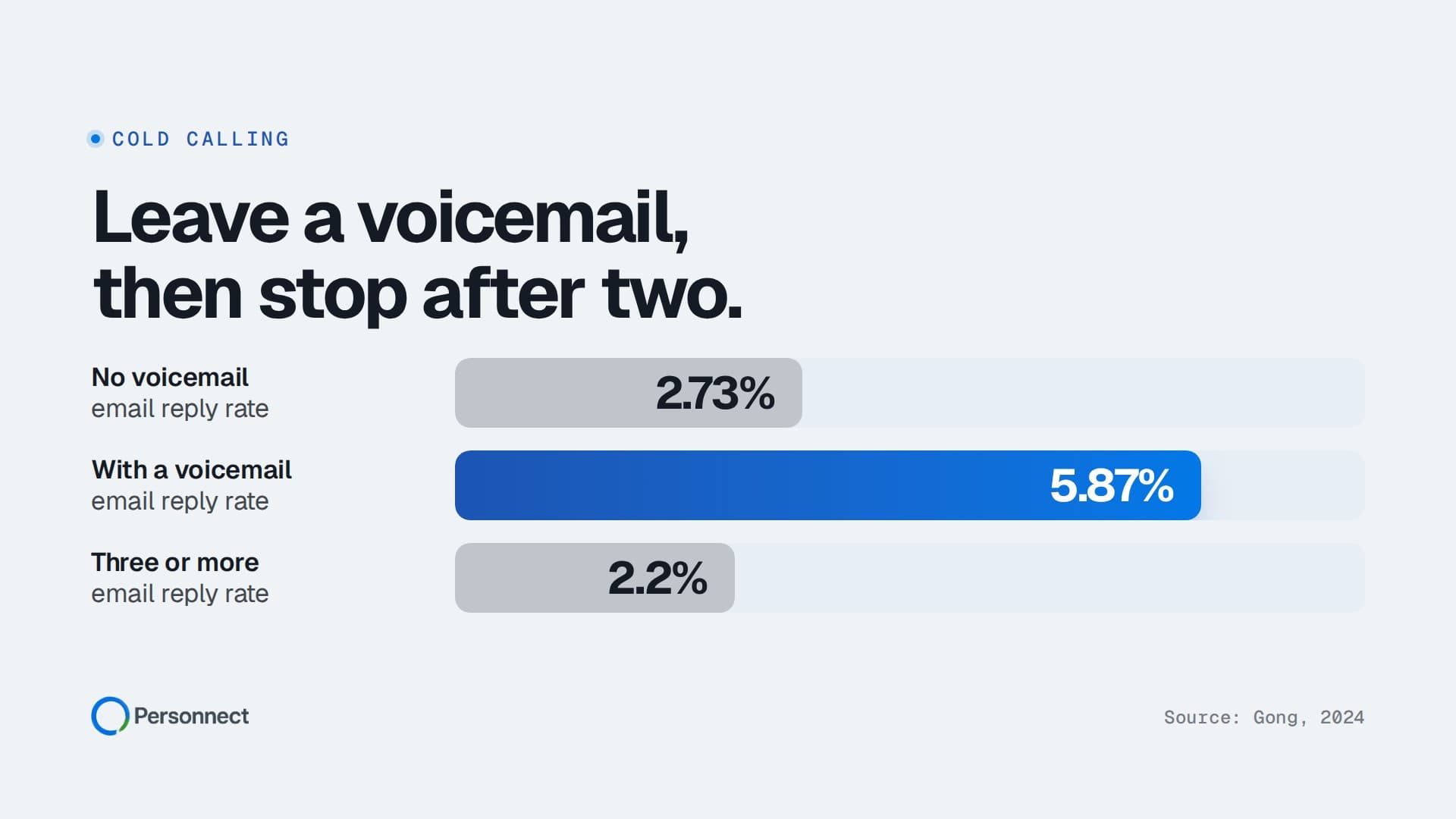
About a third of sales calls reach voicemail, and most dialers log them as nothing. Teams that pair a power dialer with AI call analysis extract signal from voicemail too: is the greeting the named contact, is the number still active, does the mailbox have a company identifier. That is roughly 30 percent of call volume turning from waste into insight. It is also why "even when they don't pick up" has become a useful category on revenue dashboards.
They Instrument the Handoff, Not Just the Response
High-performing teams measure not just how fast the first touch fires but how fast context lands with the rep. If a lead is routed in 90 seconds but the SDR has to tab through four tabs to find the account history, the functional speed-to-connection is slower than the SLA suggests. Tight CRM sync, where call notes, dispositions, and verification status flow automatically, is what closes that last gap.
How to Measure Speed-to-Connection on Your Team
You cannot improve what you do not measure. Speed-to-connection needs its own dashboard, not a footnote under the speed-to-lead chart.
The Four Numbers That Matter
Start with these four and build from there. Response latency: median minutes from lead creation to first outbound action. Connect rate: percent of dial attempts that reach a real person. Verified-contact rate: percent of attempts that return a confirmed verification status, whether connected or not. Context latency: median seconds from connection to rep having relevant account data on screen. Multiply the first three conceptually to approximate your true speed-to-connection. If any one of them is weak, the product is weak.
Old Playbook vs New Playbook
Dimension Old Playbook (Speed to Lead) New Playbook (Speed to Connection) Primary metric Minutes to first touch Minutes to verified conversation Data assumption Form data is correct Data decays; verify on every touch Unanswered calls Logged as "no answer" Treated as verification data Caller ID One pool shared across team Dedicated numbers per team, health-monitored Reporting unit Response SLA compliance Verified-contact rate + connect rate Optimization lever Faster routing Better data plus faster routing Rep confidence Implicit, rarely measured Tracked via list acceptance rates
Watch the Failure Modes
Two failure modes show up when teams start measuring speed-to-connection. The first is teams who game response latency by firing dummy touches, auto-dialers that ring for two seconds and hang up, just to stop the clock. This pollutes data and teaches reps to distrust the metric. The second is teams who over-index on connect rate and slow down their response SLA. Both fail. Speed-to-connection is a compound metric for a reason. Degrading one leg to boost another still leaves the prospect waiting.
The Real Takeaway for 2026
Speed to lead was never the point. The point was the conversation. The five-minute rule survived this long because, under old conditions, speed was the best proxy for getting into a real conversation fast. It is not the best proxy anymore. Speed plus verification plus context is.
None of this requires abandoning the SLAs you have. It requires adding a layer. Keep the five-minute clock. Add a verified-person clock. Add a connect-rate chart. Treat every dial, answered or not, as data that sharpens the next one. The teams that do this are not running faster. They are running with better instruments.
The real measure is knowing which calls actually connected, which ones only looked like they did, and which unanswered dials still told you something useful. That is the metric that replaces speed to lead in 2026.
Frequently Asked Questions
Is the 5-minute rule still valid in 2026?
Yes, but only as a floor. The InsideSales and Drift data confirming a 21x qualification drop-off between 5 and 30 minutes still holds. What changed is that hitting the window is no longer a competitive advantage; it is table stakes. The new advantage is speed-to-connection, which combines response latency with data accuracy and verification.
What is speed-to-connection?
Speed-to-connection is the time from a sales signal (inbound form, intent trigger, or dial) to a real conversation with a verified person. It compounds response time, contact accuracy, and context delivery into a single metric that correlates with pipeline better than raw response time alone.
Why do connect rates keep dropping?
Three reasons. Spam and robocall filtering by carriers and apps has become more aggressive, flagging even legitimate outbound numbers. Business contact data decays at roughly 30 percent annually, so lists age into noise. And buyers increasingly screen unknown calls by default, especially on mobile. The result is average B2B connect rates of about 4.8 percent, per Bridge Group.
How does Personnect fit into a speed-to-connection strategy?
Personnect is a sales enablement tool that combines a power dialer with verification on every call, including unanswered ones, and AI call analysis that captures sentiment, objections, and action items. Because every dial returns verified data about the contact, teams can improve response speed without degrading list quality, and CRM sync keeps the context layer tight.
What should I stop tracking if I move to speed-to-connection?
Do not stop tracking response SLA; keep it. Do stop treating it as the north star. Reports that rank reps solely on minutes-to-first-touch create perverse incentives, like firing dummy touches to game the clock. Pair it with connect rate and verified-contact rate so the team is rewarded for conversations, not motion.
How do I start measuring this without a full tooling change?
Pull three numbers from existing data this week: median minutes to first outbound action, connect rate per dial, and percent of contact records updated from call activity. That is a rough speed-to-connection baseline. If the third number is under 10 percent, your CRM is flying blind and no amount of response-time optimization will fix it. Start there.