Every quarter brings a headline declaring that AI is about to make sales reps obsolete. The pitch is familiar: autonomous agents will research the account, write the email, place the call, handle the objection, and book the meeting while the rep watches.
The reality on the ground is quieter and more interesting. AI is genuinely changing outbound sales, but not by replacing the person on the call. It is changing the work around the call: prep, dialing, verification, logging, analysis, next-step planning. The conversation itself, the part where a buyer decides whether to trust a vendor, still belongs to the rep.
This piece is for sales leaders, SDR managers, and revenue ops teams making real budget decisions about AI in outbound. It separates what AI is genuinely good at from what it is not, and lays out a practical model for AI investment.
Key Takeaways
- AI is changing the work around the call (prep, dialing, verification, logging, analysis), not the conversation itself, which still belongs to the rep.
- AI does well at repetitive, structured work: research, data hygiene, voicemail detection, post-call logging, and spotting patterns across the team.
- It is weak wherever judgment matters: real rapport, objections, multithreaded deals, and reading the room.
- The teams outperforming in 2026 run a hybrid model, with AI handling the layer around the conversation and reps owning the conversation.
- Judge an AI tool by whether it gives reps time back, improves the data layer, and shrinks the number of tools a rep has to navigate.
The Real Shift Is in the Workflow, Not the Headcount
What has actually changed in outbound is the cost structure of every non-conversation activity around a call. Research, list hygiene, post-call logging, sentiment tagging, follow-up drafting: these were billable rep hours five years ago. Today they are mostly machine work, and getting cheaper every quarter.
Salesforce's State of Sales report has shown for years that reps spend roughly 28 percent of their week actually selling. The other 72 percent goes to administrative work, list cleanup, internal meetings, and tool-switching. That number has barely moved across half a decade of tooling investment, which tells you something important: more software, by itself, did not free up time. Most of those tools added new surfaces to manage instead of absorbing existing tasks.
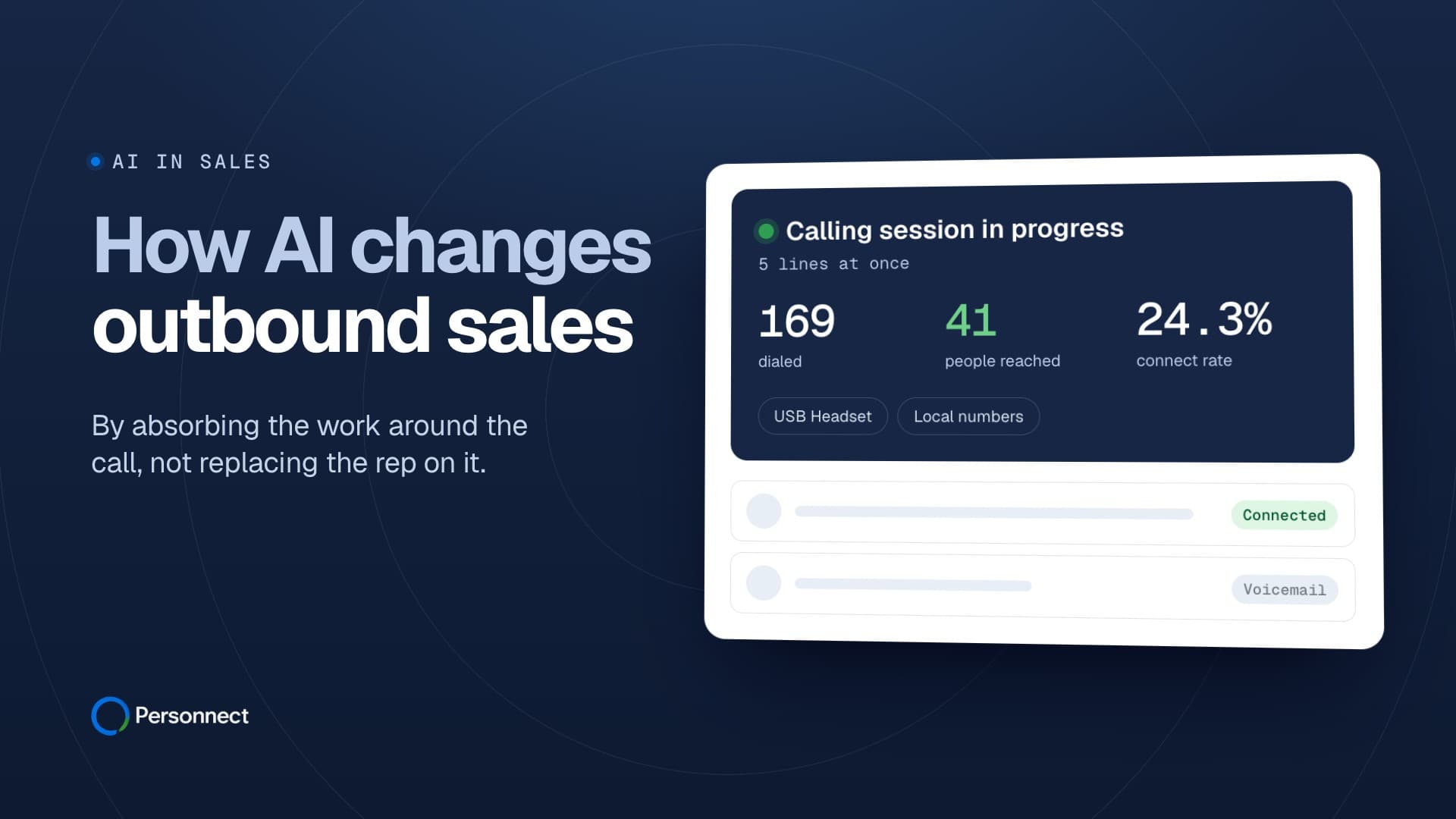
What is different now is that the most boring, lowest-judgment parts of outbound are finally getting absorbed instead of just digitized. AI can transcribe the call, log it, score sentiment, extract action items, and update the CRM record without anyone touching a keyboard. It can score and re-score a list overnight. It can detect a voicemail in under a second so a rep never sits through a greeting. None of this is the rep's job replaced. It is the rep's job edges trimmed.
The shift is from buying tools that ask reps to do more, to buying tools that quietly do more so reps can do less. That reframes the entire AI question for sales leaders.
What AI Is Genuinely Good At in Outbound
There is a short, honest list of things AI does well in outbound today. It is worth being specific because the marketing copy in the category is not.
Research and prep. Pulling together a one-pager on a prospect, summarizing recent company news, and drafting a relevant opening line is something AI does in seconds. Per the LinkedIn State of Sales 2024 report, 73 percent of sales professionals already use AI tools, and the highest-rated use case is research and account context.
Data hygiene and verification. This is where AI quietly does the most damage to old assumptions. Contact data decays at roughly 30 percent per year in normal conditions, per Dun and Bradstreet and HubSpot benchmarks. At that pace, a list that starts the year 90 percent accurate ends it somewhere near 63 percent. AI-driven verification, run on every dial rather than at list purchase, turns this from a quarterly cleanup project into a continuous output of the workflow itself.
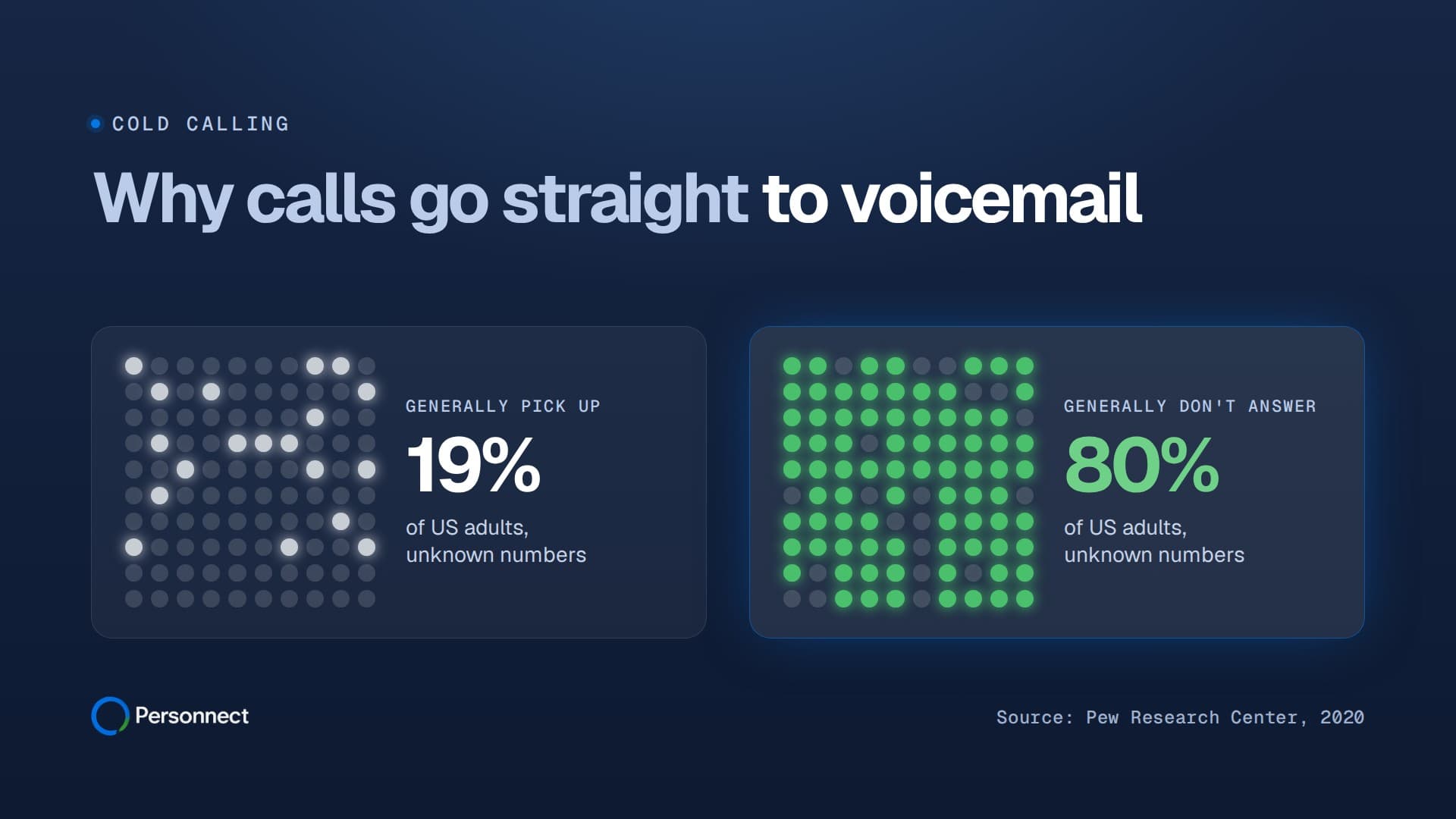
Dialing infrastructure and answering-machine detection. The average outbound call connects only about 4.8 percent of the time, per Bridge Group's SDR Metrics Report. That means 19 of every 20 dials never reach a person. AI helps three ways: detecting voicemails in under a second, picking the right local number based on the prospect's area code, and rotating numbers to avoid spam flags. None of it is glamorous. All of it returns measurable hours.
Post-call analysis. Sentiment, talk ratio, objections, action items, next steps. These were the worst part of the rep's day for years. AI captures them automatically and pushes them into the CRM. This is the thinking behind tools like Personnect, which treats every call, including unanswered ones, as a data point and pushes more than 20 fields per call back into the CRM without rep involvement. Logging stops being something the rep does and starts being something the system does.
Pattern detection across the team. A single rep cannot tell you which opener works best across 5,000 calls. AI can. Same for objection patterns, time-of-day effects, and which industries respond to which messages. This is not replacing rep intuition. It is giving managers a real signal to coach against.
What AI Is Bad At, and Probably Will Be for a While
The reverse list matters just as much, and it is the part the AI-replacement pitch tends to skip.
Real rapport. A buyer can tell within ten seconds whether the voice on the other end is invested. That investment is not a tone of voice problem. It is the rep deciding, in real time, that this person is worth their attention. Synthetic voices have improved. The thing they have not learned is to actually care.
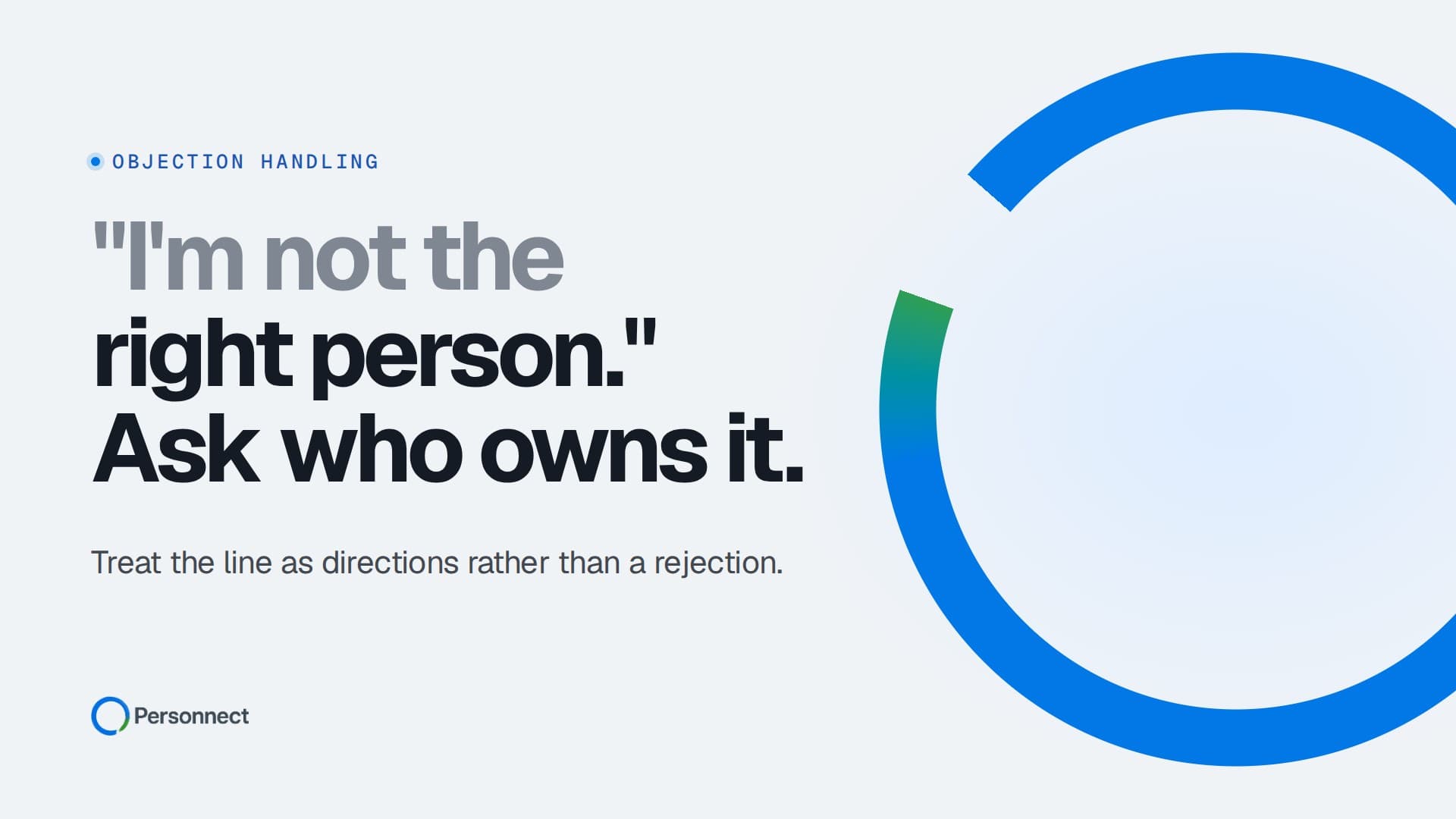
Judgment in objections. "We are happy with our current vendor" is not an objection. It is a sentence that could mean six different things. The rep who chooses the right next question, based on a half-heard cue earlier in the call, is doing something AI cannot reliably do. The interesting part of the call is exactly the part that does not generalize.
Complex multithreading. Modern B2B deals involve six to ten stakeholders on average, per Gartner CSO research. Navigating an org chart and sensing the politics between procurement and engineering is rep work, and it has gotten harder, not easier, as buying committees have grown.
Reading the room when something is off. A prospect who sounds distant is sometimes telling you the deal is in trouble and sometimes telling you their kid was up all night. The rep who reads it correctly saves the deal. AI sentiment scores will tell you the call was 12 percent more negative than baseline, which is accurate and not actionable.
The pattern is the same across all four. AI is good at work that is repetitive and structured. It is bad at work that requires judgment under ambiguity. Outbound conversations are mostly the second kind.
The Hybrid Model That Is Winning
Most of the teams that are quietly outperforming the market in 2026 do not run an "AI strategy" or a "pure rep" approach. They run a hybrid where AI handles the layer around the conversation and reps own the conversation itself.
The structure looks roughly like this. AI does the research and writes a one-page brief before the call. The dialer verifies the number, picks the right caller ID, screens out voicemails, and connects the rep instantly when a real person answers. The rep has the conversation. AI logs it, summarizes it, extracts action items, and pushes everything to the CRM. AI then drafts the follow-up email; the rep edits and sends. The next call's brief gets better because the system learned from the last one.
What changes inside this loop is striking. McKinsey's 2024 research on sales productivity found that organizations deploying AI across the outbound workflow report 10 to 20 percent gains in sales productivity, and the gains concentrate in teams where AI is positioned as augmentation rather than automation. Forrester's 2024 work on integrated sales workflows shows the same pattern: deeply-integrated stacks outperform fragmented ones, not because they have more features, but because they reduce the number of context switches a rep makes per day.
Personnect's approach to verification on every dial reflects this principle: do not just dial faster, dial smarter. Its position that unanswered calls still verify your contacts is interesting less as a feature and more as a worldview. A missed call is no longer a dead end. It is signal that flows back into the list and improves the next dial. The rep is freed from cleanup, but the conversation, when it happens, still belongs to them.
The Bridge Group SDR Metrics Report has tracked teams that verify contact data continuously and finds they post connect rates two to three times higher than volume-only teams. The hybrid model wins not because it adds AI on top of the existing workflow, but because it changes which parts of the workflow the rep actually has to touch.
How Sales Leaders Should Think About AI Investments
If you are evaluating an AI tool for your outbound motion, the marketing copy will not help you. Most of it sounds the same. The questions below are more useful than any feature checklist.
Does it give the rep time back? Run the math on a typical week. If the tool returns at least three hours per rep per week in honest practice, it is probably worth it. If it returns less, you are paying for a dashboard. Per McKinsey's 2024 sales report, the highest-ROI AI deployments in outbound consistently target time-back-to-rep as the primary metric.
Does it improve the data layer? Tools that read from the CRM but do not write back useful new information are net consumers of data quality. Tools that verify contacts, update records, and capture conversation data automatically are net producers. Gartner has put the cost of poor data quality at roughly 12.9 million dollars per organization per year; tools that fight that decay are doing structural work.
Does it enable the rep, or replace a step the rep was doing well? This is the most important question and the one most often skipped. Logging calls badly is a step worth replacing. Building rapport on the phone is not. A tool that automates the second category looks impressive in a demo and underperforms in the field.
Does it reduce the surface area the rep has to navigate? A rep on a typical B2B sales floor uses 8 to 16 distinct tools, per Gartner. Every additional tool is a context switch. Platforms built around this hybrid principle, like Personnect, position the rep as the irreplaceable layer and the AI as the layer that prepares, verifies, and learns from each conversation.
Does it survive a rep who does not love it? Adoption is brutal in sales. If a tool only works when the rep meticulously updates fields, it does not work. The tools that win produce value even when the rep ignores them.
What This Means for SDRs Specifically
For the people in the chair, this is the more personal question. Which skills get more valuable in an AI-augmented outbound world, and which lose value?
Skills that grow in value. First, voice presence. As the surrounding workflow gets more automated, the call itself becomes the thing that differentiates one vendor from another. A rep with genuine warmth and a sharp ear for objections is worth more, not less, when AI is doing the dialing. Second, account strategy: knowing which three people to reach in a 200-person organization and why. AI can score leads, but choosing who to spend an hour preparing for is still rep work. Third, coaching others. As AI captures every conversation, the senior rep who can pattern-match and teach pulls ahead.
Skills that lose value. Manual data entry was always low-value and is now near-zero. Memorizing a generic script matters less when AI can prep a personalized opener. Brute-force dialing as a personal differentiator is gone, because the dialer does it better. Reps whose competitive edge was sheer activity volume will feel the squeeze first.
The honest message to SDRs is this. The job is getting harder in the parts that always mattered (judgment, rapport, strategy) and easier in the parts that drained you (logging, list-cleaning, voicemail-waiting). Good trade if you are good at the conversation. Bad trade if you were hiding behind activity metrics.
Frequently Asked Questions
Will AI replace SDRs in the next five years?
No, but it will replace SDR work that does not require judgment. The SDR role in 2030 will likely involve fewer dials per day, more prepared conversations, and far less administrative overhead. The pattern across the research is consolidation of the role around higher-value tasks, not elimination of it.
Where should a sales team start with AI in outbound?
Start with the layer that returns the most hours per rep per week. For most teams, that is automatic call logging, contact verification, and AI-assisted research and follow-up drafting. These produce immediate time savings and improve data quality at once. Avoid starting with anything that tries to replace the conversation itself.
How do you measure whether an AI investment is working?
Track three things: hours per rep per week in actual conversations, connect rate over time (which shows whether the data layer is improving), and conversion from conversation to booked meeting (which shows whether reps are better-prepared). If all three are moving the right way, the investment is real. If only activity numbers are up, it is not.
Does AI hurt or help connect rates?
It helps when paired with verification. AI dialing on a stale list amplifies bad outcomes; the rep blasts more dead numbers faster, and the caller ID gets flagged as spam in the process. AI dialing on a continuously verified list does the opposite. Platforms like Personnect, where unanswered calls still verify your contacts, generate data on every dial even when the prospect does not pick up, so the list gets better with each attempt instead of decaying.
What about AI that runs the whole call autonomously?
The technology exists. The question is whether buyers tolerate it for high-consideration B2B purchases, and the early evidence is no. Buyers will accept AI for scheduling, qualification, and routine follow-ups. The decision conversation, where trust and judgment matter, is still the rep's. Bet on the hybrid model for any deal worth more than a few thousand dollars in annual contract value.
How should we change the SDR hiring profile?
Hire for voice, curiosity, and coachability. Activity-based metrics rewarded reps who could grind. The new stack rewards reps who can think fast on the call, ask the second question, and hold attention for ninety seconds with a busy buyer. Look for prior experience that required reading people in real time.
Closing Thought
The most useful way to think about AI in outbound is not as a replacement layer. It is a preparation, verification, and learning layer that surrounds the rep. The conversation is still the conversation. What changes is everything around it: cleaner data, better prep, faster connects, no manual logging, sharper coaching. The pitch that AI replaces the rep misreads what the rep was actually doing all along. The boring 72 percent of the week was always the part to automate. The 28 percent that involves a buyer deciding whether to trust your company was always the part worth protecting. AI finally lets sales leaders do both.