Sales reps spend less than 30% of their week actually selling, according to Salesforce's State of Sales report (2024). Yet most sales tools still bill for a seat whether that rep dials 200 times a day or logs in twice a month. That's the core tension in software pricing right now: per-seat models charge for access, while usage-based models charge for work. For a sales team, the gap between those two ideas can add up to thousands of dollars a month in either waste or fair spend. This guide breaks down how each model works, where each one aligns with how sales teams actually operate, what per-seat still does well, and how to run the math on your own stack before you sign anything.
Key Takeaways
- Per-seat pricing charges for access; usage-based pricing charges for consumption. The right choice depends on how evenly your team uses the tool.
- Seat waste is real money: companies use only about half the software licenses they buy, on average (Zylo, 2024).
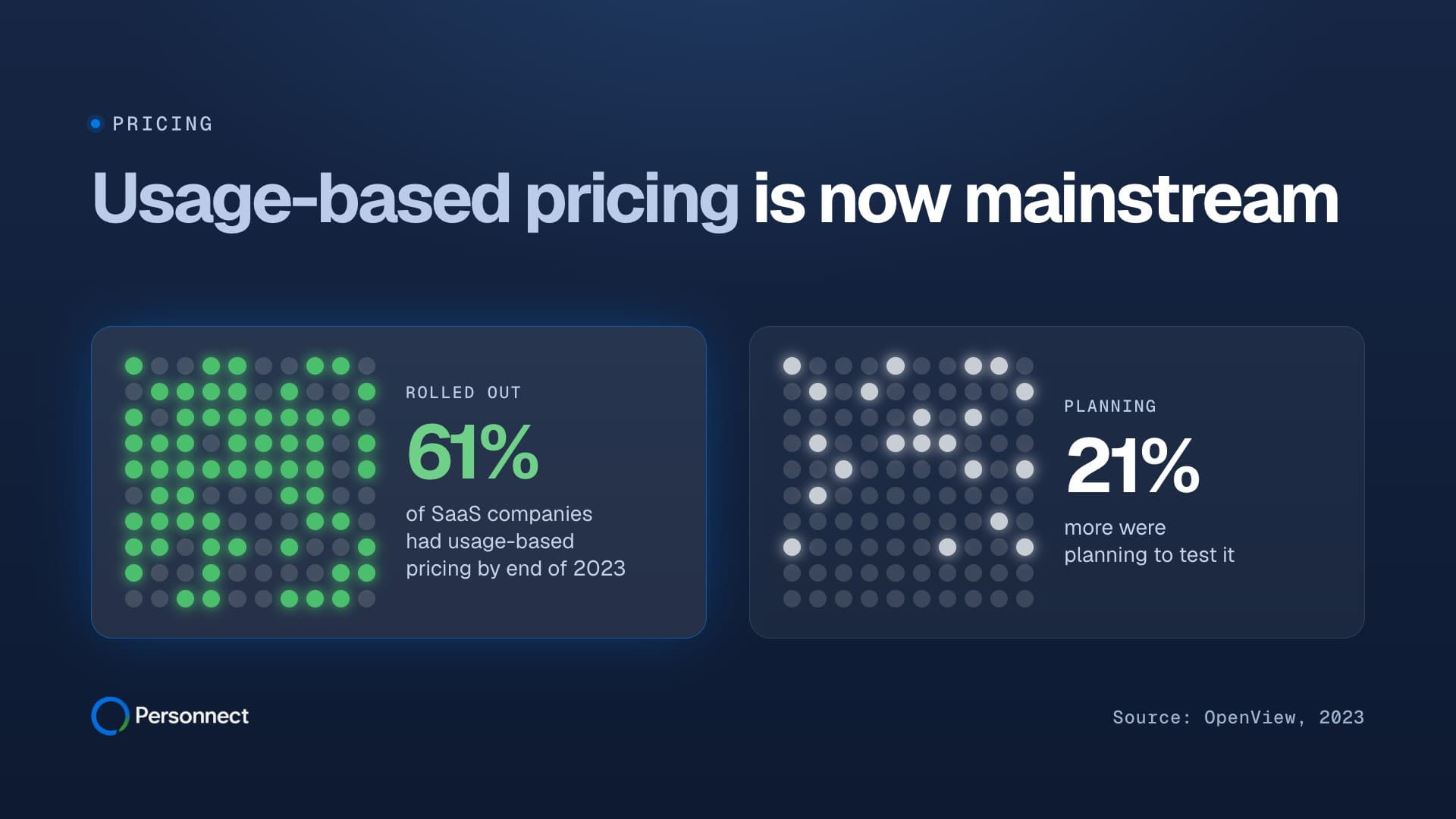
- Usage-based pricing is now mainstream. 61% of SaaS companies had adopted some form of it by the end of 2023 (OpenView, 2023).
- Per-seat pricing's strength is a fixed, predictable line item, which is why it still anchors daily, all-hands tools like a core CRM.
- The best test isn't the model's name. It's whether your bill tracks the value the tool actually produces.
What is per-seat pricing, and why has it dominated SaaS?
Per-seat pricing charges a fixed fee for each licensed user, usually monthly or annually. It dominated SaaS for a decade because it's simple to forecast and easy to sell. Even now most vendors bundle a per-seat component, though IDC forecasts that 70% of software vendors will move away from pure per-seat models by 2028 (IDC, 2024).
How per-seat pricing works
You buy licenses in blocks. Ten reps, ten seats, one predictable line item. The price rarely moves with activity, so a rep who makes 400 calls a day costs the same as one who's out on leave. Vendors like it because revenue is easy to model, and expansion just means selling more seats into the same account.
Why it won the last decade
Per-seat pricing matched an earlier reality. When teams were stable and everyone used the same tools daily, a seat was a fair proxy for value. Finance could budget it cleanly, and procurement could compare vendors on a single number. That simplicity is why the model spread so fast, and it's why per-seat still anchors most contracts today.
Where per-seat quietly leaks
The problem shows up when usage isn't even. Roughly 53% of software licenses go unused or under-used inside organizations (Productiv, 2024). In sales, that waste compounds: ramping reps, open roles, and turnover all leave seats paid for but idle. You end up funding capacity instead of output, and the cost never arrives as a line item labeled "waste."
What is usage-based pricing, and why is it growing?
Usage-based pricing ties your bill to consumption: minutes dialed, records enriched, messages sent, or another unit of real work. Adoption has climbed fast. 61% of SaaS companies had rolled out some form of usage-based pricing by the end of 2023, with another 21% planning to test it (OpenView, 2023).
How usage-based pricing works
Instead of buying access, you buy volume. The meter runs when the tool does work, so a light month costs less and a heavy month costs more. Most vendors publish a unit rate, and some blend it with a small base fee. The detail that matters most is what the meter actually measures, because that's what decides whether your bill tracks value or just activity.
Why adoption keeps climbing
The money follows the model. Usage-based companies post median net dollar retention around 120%, versus roughly 110% for pure subscription peers (OpenView, 2023). Revenue grows as customers succeed rather than only when they add seats, which aligns the vendor's incentives with the customer's results. A vendor that earns more when you use the tool has a reason to make the tool worth using.
What "value" means for a dialer
For a sales dialer, the natural unit is talk time. Personnect, an outbound dialer, prices this way: about $0.085 per minute of calling plus numbers from roughly $1 per month, with unlimited users and no platform fee. A team of 5 or 50 pays for the calling it does, not for the badges on the wall. The unit of pricing sits right on top of the unit of work.
Which pricing model aligns better with how sales teams actually work?
Usage-based tends to fit sales better because sales work is uneven by nature. Reps ramp, churn, and cover for open roles. Average SDR attrition runs 40% to 50% a year and ramp takes about three months (The Bridge Group, 2024), so a real chunk of any per-seat bill funds seats that aren't producing yet.
The "you pay whether the rep dials or not" problem
Per-seat pricing decouples cost from activity. A rep on leave, a new hire in training, or a territory in transition all bill the same as your top performer. When headcount is in flux, and in sales it usually is, that gap turns into steady leakage. It rarely triggers a review because no single invoice looks wrong; the waste is spread thin across every seat.
Ramp time and turnover create dead seats
With three-month ramps and tenure often near a year, the productive window per rep is short (The Bridge Group, 2024). Every departure resets the clock, and the seat keeps billing straight through the vacancy while the role sits open. Usage-based pricing absorbs this automatically: an idle account simply meters less, so your cost falls with your output instead of lagging behind it.
Paying for output, not access
A good usage-based tool still earns its rate on quiet days. Personnect verifies contacts even on unanswered calls, so a dial that doesn't connect still returns data. That matters because connect rates are low: the average cold call succeeded just 4.82% of the time in 2024 (Cognism, 2024). If a tool only produced value on connect, it would waste most of its meter and most of your reps' effort.
What does per-seat pricing still do well?
Per-seat isn't obsolete. Its strength is predictability: a fixed number finance can forecast and defend, which matters when budgets are tight. That is why it still anchors the tools everyone opens all day, every day.
Tools everyone uses daily
Think of a core CRM or a daily communication app. When every licensed person logs in daily and uses the tool heavily, a seat is a fair proxy for value, and there is little idle capacity hiding in the bill.
A number finance can set and forget
Usage-based bills move month to month, which some finance teams dislike. A flat per-seat line is easy to forecast and easy to defend in a budget review, and the price of that simplicity is paying for whatever capacity sits idle.
Flat usage versus spiky usage
Some tools have naturally flat usage. A password manager or a document editor gets roughly the same use from everyone, so a seat and a meter would bill much the same. Sales dialing is the opposite: usage swings with ramps, vacancies and campaigns, and that is where a meter earns its keep. Match the model to the shape of your usage, not to the trend.
How should you evaluate pricing for your sales stack?
Start with your own utilization data, not the vendor's pitch. Companies use only about half the software licenses they pay for, on average (Zylo, 2024). Before you compare models, measure how evenly your team actually uses each tool. Uneven or spiky usage is where a meter pays off, and sales usage is almost always spiky.
Map your utilization honestly
Pull login and activity data for the last two quarters. How many seats sat idle? How many reps were ramping or gone? If a meaningful share of your seats produced little, per-seat is quietly overcharging you, and a usage-based option deserves a serious look. You can't judge a pricing model without your own numbers in front of you.
Find the unit of value and check the meter
Ask what the meter measures and whether it maps to outcomes you care about. For a dialer, per-minute plus per-number is transparent and easy to audit. Confirm there's no separate platform or seat fee hiding under the usage rate, because that reintroduces exactly the waste you were trying to escape. A clean meter has one job: bill for work done.
Run the math on both models
Model your real volume against each price. Take your monthly call minutes and number count, multiply by the usage rate, and compare that to the per-seat quote at your actual headcount. A usage-based dialer like Personnect, which charges per minute and per number with unlimited users, often wins for teams with variable activity, because idle reps and open roles cost nothing on a meter. Whatever the shape of your team, let the arithmetic decide.
| Dimension | Per-seat pricing | Usage-based pricing |
|---|---|---|
| How you pay | Fixed fee per licensed user | Fee per unit of work (minutes, records, calls) |
| Budgeting | Fixed line item, easy to forecast | Moves with activity; forecast from your own volume |
| Incentive alignment | Vendor grows by adding seats | Vendor grows when you use it and succeed |
| Seat-waste risk | High when usage is uneven | Low; idle accounts meter less |
| Scaling cost | Jumps with headcount | Tracks actual activity |
| Typical use | Daily, all-hands tools such as a core CRM | Spiky, output-driven tools like dialers |
Frequently Asked Questions
Is usage-based pricing always cheaper than per-seat?
It depends on your volume, which is why it is worth modeling. Usage-based pricing saves the most when consumption is uneven, and since companies waste about half their licenses on average (Zylo, 2024), most teams carry idle seats a meter would stop paying for. Run your own minutes against the per-seat quote before you sign.
Does usage-based pricing make budgeting harder?
It can, because bills move with activity. That said, most usage-based vendors publish clear unit rates, so you can forecast from your own volume trends. With average SDR attrition at 40% to 50% a year (The Bridge Group, 2024), a meter that flexes with headcount can actually be easier to plan than paying for seats you might never fill.
How does usage-based pricing work for a sales dialer?
A dialer typically meters talk time. Personnect, for example, charges about $0.085 per minute of calling plus numbers from roughly $1 per month, with unlimited users and no platform fee. So a 5-person team and a 50-person team both pay for the calling they do. With connect rates near 5% (Cognism, 2024), paying per minute keeps cost tied to real conversations.
Won't reps use the tool less if we pay per use?
Evidence doesn't support that fear. Sales activity is driven by quota and pipeline, not by a per-minute rate that's a fraction of a rep's cost. Reps already spend under 30% of their week selling (Salesforce State of Sales, 2024); the constraint is their time, not the meter, so usage-based pricing rarely changes calling behavior.
What's the biggest hidden cost in per-seat pricing?
Idle seats. Roughly 53% of software licenses go unused or under-used (Productiv, 2024), and in sales that means ramping reps, open roles, and departures you keep paying for. The cost never appears as a line item called "waste," which is exactly why it's so easy to miss at renewal time.
Conclusion
Per-seat pricing turns access into a fixed, predictable line item, which is why it still anchors daily, all-hands tools. Usage-based pricing fits sales work, which is spiky by nature: reps ramp, cover open roles, and turn over, and a meter absorbs all of that without funding idle capacity. The way to decide is to run the math on your own team. Pull your real utilization, model your actual call volume against each quote, and check for hidden platform or seat fees under any usage rate. In sales, where usage is almost always uneven, tie your cost to the work and let the bill track the value.